
Engine Hood Import Guide: Trends, Policies & Compliance
or complex compliance issues.
clearance and fund security.
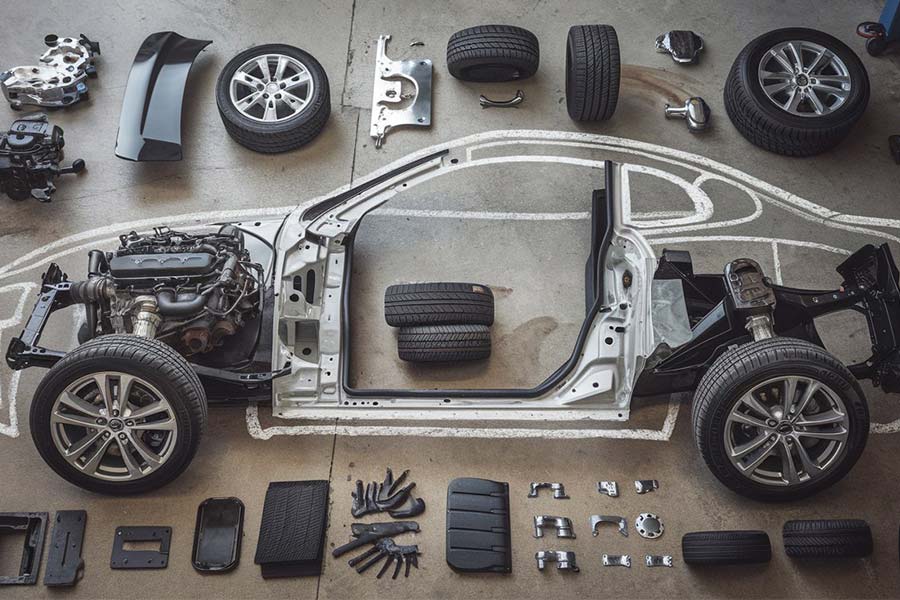
Introduction Output:
Against the backdrop of a highly - specialized global automotive industry chain,car hoods (front car covers) as important body panels,the import demand is rising year by year.However,the customs declaration process involving complex links such as material classification,origin certification,and safety compliance often becomes a bottleneck in the enterprises supply chain efficiency.Based on 20 years of practical experience in agency services,this article deeply analyzes the core points of car hood imports.
I.Industry Trends and Policy Background of Car Hood Imports Output:
1.Characteristics of Market Demand
- MaterialDiversification:Aluminumalloy(lightweighttrend),carbonfiber(high-endmodels),andgalvanizedsteel(anti-corrosiondemand)haveasignificantlyincreasingproportion.ThematerialdirectlyaffectstheHScodeclassificationandtaxrate.
- CentralizationofOrigin:ThedemandforaccessoriesofGerman,Japanese,andAmericanbrandsisstable.TheriseofemergingproductionbasesinSoutheastAsia(suchasThailandandVietnam)bringstariff-preferentialopportunities.
2.Policy Wind Vane
- KeySupervisionItemsoftheChineseCustoms:
- Involvesenginehoods(suchassmarthoodswithpre-installedelectroniccomponents);
- Anti-dumpingdutyrisks(suchastheEUstaxraterestrictionsonChinesecold-rolledsteelaccessories);
- Dividends of Free Trade Agreements: Under the RCEP framework,the import tariff of car hoods of ASEAN origin can be reduced to 0% (requires precise planning)Clear).
II.Full - process Breakdown of Car Hood Imports (with Time - limit and Cost - control Nodes) Output:
Step 1 Pre - compliance Preparation
- Pre-classificationofHScodes(Errorrate5%isqualified):
Example: Unpainted aluminum alloy car hoods are recommended to be classified under 8708.29,with a tariff of 8%; if there is a paint finish,it is necessary to confirm whether a surface - treatment surcharge is triggered.
It is mandatory to provide: Certificate of Origin,Material Test Report,Brand Authorization Letter (for OEM parts);
High - risk item: Wooden packaging needs to be labeled with the IPPC mark,otherwise it will face the risk of fumigation and detention at the port.
Step 2 International Transportation and Declaration upon Arrival at the Port
- SelectionofTransportationSolutions:
Less-than-container load (LCL) (for cost-sensitive customers) vs Full Container Load (FCL) (preferred for high-value orders);
Special case: Carbon fiber hoods require temperature-controlled containers to avoid moisture damage that may lead to failed quality inspection.
The declared value must be strictly consistent with the purchase contract and payment voucher.Under-reporting will trigger customs price inquiries (it is recommended to keep bargaining emails as evidence).
Step 3 On-site inspection and rapid release
- Inspectionrateanalysis:
The inspection rate of metal hoods is approximately 12% (focusing on the consistency between the alloy composition and the declaration);
Avoidance strategy: Prepare an SGS material test report in advance to shorten the inspection time to within 3 working days.
It is necessary to mark: brand,model,material,country of origin (Chinese labels can be affixed later,but need to be noted during declaration).
Step 4 Tax optimization strategy
- Tariffreductionpathways:
Case: A German company achieved a tariff reduction from 10% to 0% by transiting and processing in ASEAN and using the FORM E certificate;
Under the bonded warehousing mode in the zone,the 13% VAT can be postponed,relieving the cash flow pressure.
III.High - incidence risk cases and response plans Output:
Case 1: Return shipment due to non-compliant materials
- Problem:Acompanyimported"aluminumalloyenginehoods,"butanX-rayinspectionbycustomsrevealedanexcessiveironcontent,leadingtotheirclassificationasgalvanizedsteel(withatariffdifferenceof5%).
- Solution:Resubmitthecomponentanalysisofathird-partytestingagency,andreleaseafterpayingthedifferentialtax(ittook22daysandtheadditionalcostincreasedby8%).
Case 2: Intellectual property disputes
- Problem:HoodsimitatingtheLOGOofaJapanesebrandweredetainedbythecustomsandfacedinfringementfines.
- Countermeasure:Establisha"BrandAuthorizationDatabase"andrequiresupplierstoprovideproofofthetrademarkusageauthorizationchain.
IV.Innovative practices of digital customs declaration Output:
1.Intelligent classification system:
Input material,size,and process parameters,and AI automatically recommends HS codes (with a measured accuracy rate of 92%).
2.Real - time tracking of customs clearance status:
Connect with the customs single - window API to push early warnings for inspection,tax payment,and release nodes.
Conclusion Output:
The import of engine hoods is not merely a logistics operation,but a comprehensive test of supply chain compliance capabilities.Enterprises must establish a trinity management system encompassing "policy interpretation,process design,and risk contingency plans." Selecting an agency service provider with specialized qualifications for automotive parts can reduce hidden costs by 15%-20%,thereby maximizing supply chain value.
(Note: The data in this article is based on the public data of the Chinese customs in 2023 and actual enterprise operation cases.Policy changes shall be subject to the latest announcements.)
Author’s Profile: Deeply engaged in theindustry for 20 years,serving over 500Import enterprises,leading the design of the "Automotive Parts Customs Clearance Standardization System," achieved a 40% optimization rate in single-customs declaration efficiency.
Was this helpful? Give us a like!
Contact our experts for compliance audits, precise quotes, and one-stop customs support.
Recent Comments (0) 0
Leave a Reply