
EU Microplastic Ban: What Manufacturers Need to Know
or complex compliance issues.
clearance and fund security.
In modern society,the issue of microplastics has increasingly become a global focus.These plastic particles smaller than 5mm have left their footprint in marine,freshwater,and terrestrial ecosystems,as well as in our food and drinking water.This challenge has prompted governments and organizations worldwide to take action in finding ways to mitigate or solve microplastic pollution.Against this backdrop,the European Union has made a significant decision to impose strict restrictions on the use of microplastics by amending Annex XVII of the REACH Regulation.This article will explore the specifics of this regulation,its impact on businesses,and the potential global implications of this policy.
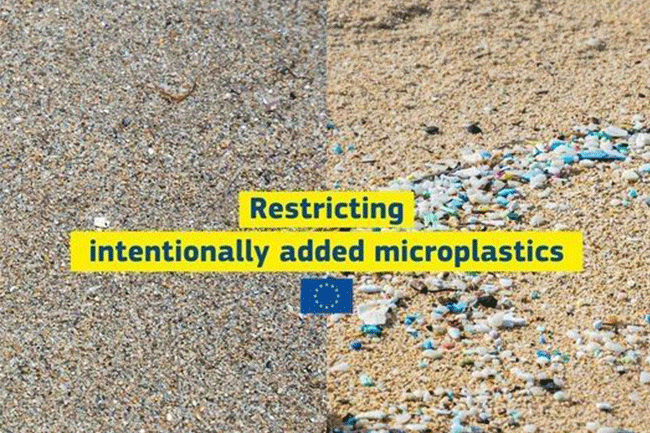
I.Content of the EU Microplastics Restriction Regulation
(1) Overview of the Regulation Amendment
On September 25,2023,the EU formally adopted the microplastics restriction proposal,which was passed in Brussels after years of discussion.Its core is the amendment to Annex XVII of the REACH Regulation,aiming to restrict the placing on the market of microplastics and related products within the EU to reduce their environmental pollution.
(2) Specific Definition and Restrictions of Microplastics
The regulation provides a clear definition of "synthetic polymer microparticles," which refers to non-natural synthetic carbon-based polymer particles or fibers that are difficult to degrade,with a diameter of less than 5mm or a length not exceeding 15mm and an aspect ratio greater than 3,and a solubility of ≤2g/L,accounting for 1% or more of the total particle mass.The relevant restrictions include prohibiting the placing on the market of synthetic polymer microparticles as substances themselves or when intentionally added to mixtures (with a concentration ≥0.01% by weight).
(3) Products and Timeline
The new microplastics regulation involves restrictions on various common products and a detailed timeline aimed at gradually reducing the use of microplastics in different products.Below are some key product categories and their associated implementation timelines:
- andpersonalcareproducts
• October 17,2029After this date,synthetic polymer microparticles used for fragrance encapsulation will be prohibited.
• October 17,2027Thereafter,the use of synthetic polymer microparticles in rinse-off products shall be prohibited,unless such products fall under point (a).If a rinse-off product contains synthetic polymer microparticles used as abrasives (i.e."microbeads"),this restriction shall apply fromOctober 17,2023October 17,2035
• After this date,the use of synthetic polymer microparticles in lip products,nail products,and cosmetics will be prohibited,unless such products fall under points (a) or (b).If these products contain microbeads,this restriction will take effect onAfter this date,synthetic polymer microparticles in leave-on products will be prohibited,unless such products fall under points (a) or (c).October 17,2023October 17,2035
• October 17,2029October 17,2028
• After this date,synthetic polymer microparticles in detergents,waxes,polishes,and air care products will be prohibited,unless these products fall under point (a).If these products contain microbeads,this restriction will take effect on October 17,2023.After this date,the use of synthetic polymer microparticles in medical devices will be prohibited.If medical devices contain microbeads,this restriction will take effect on
• October 17,2029After this date,synthetic polymer microparticles in fertilizer products not covered by Regulation (EU) 2019/1009 will be prohibited.October 17,2023October 17,2035
• After this date,synthetic polymer microparticles in detergents,waxes,polishes,and air care products will be prohibited,unless these products fall under point (a).If these products contain microbeads,this restriction will take effect on October 17,2023.October 17,2031
• After this date,synthetic polymer microparticles in plant protection products and biocidal products will be prohibited.Subsequently,synthetic polymer microparticles in plant protection products and biocidal products will be banned.
• After this date,synthetic polymer microparticles in detergents,waxes,polishes,and air care products will be prohibited,unless these products fall under point (a).If these products contain microbeads,this restriction will take effect on October 17,2023.Subsequently,synthetic polymer microparticles in agricultural and horticultural products not covered by points (g) or (h) will be prohibited.
• After this date,synthetic polymer microparticles in detergents,waxes,polishes,and air care products will be prohibited,unless these products fall under point (a).If these products contain microbeads,this restriction will take effect on October 17,2023.Subsequently,synthetic polymer microparticles used as infill material in artificial sports surfaces will be prohibited.
Additionally,it is noteworthy that the EUs microplastic restrictions do establish certain exemptions for products under specific circumstances and special uses.
This category includes synthetic polymer microparticles as substances themselves or in mixtures,typically used in strictly controlled industrial environments to minimize potential environmental risks.
• Technologically protected synthetic polymer microparticles: If protected by specific technical measures that make it difficult for synthetic polymer microparticles to be released into the environment during intended use,such particles may be exempted.
• Synthetic polymer microparticles with permanently altered physical properties: If the physical properties of synthetic polymer microparticles are permanently changed during intended use to the extent that they no longer meet the definition of microplastics,they may be excluded from restrictions.
• Synthetic polymer microparticles permanently incorporated into solid matrices: This typically involves tight integration of microparticles with other materials to prevent their release during use.
To avoid overlap with existing regulations and directives,the following product categories are exempted:
• Medicinal products: Medicinal products within the scope of Directive 2001/83/EC and veterinary medicinal products within the scope of Regulation (EU) 2019/6 are excluded from restrictions.
• EU fertilizing products: EU fertilizing products within the scope of Regulation (EU) 2019/1009 are also exempted.
• Food additives: Food additives within the scope of Regulation (EC) No 1333/2008 are excluded.
• In vitro diagnostic devices: In vitro diagnostic devices,including those within the scope of Regulation (EU) 2017/746,are also exempted.
• Other food and feed: Food as defined in Article 2 of Regulation (EC) No 178/2002 not covered by point (c) of this paragraph,and feed as defined in Article 3(4) of that Regulation are also exempted.
II.Impact of the Regulation on Businesses
(1) Increased regulatory requirements
As REACH regulations become increasingly complex,the compliance requirements for enterprises are also growing,undoubtedly raising the competitive threshold and risks.Companies need to respond proactively,promptly monitor whether their products exported to Europe meet new regulatory requirements,and calmly adapt to regulatory changes.
(2) Product adjustment and R&D
Enterprises need to reassess and adjust existing products to ensure compliance with new regulatory requirements.This may involve redesigning products,replacing raw materials,or modifying production processes.
(3) Information notification and labeling requirements
For certain products in transitional periods or exempted,the regulations introduce additional information notification and labeling requirements.This may include submitting information to downstream users and competent authorities about substance characteristics,usage and release quantities,disposal and usage instructions,etc.as well as adding clearly legible and indelible warning statements on product packaging.
III.Global Implications of the EU Microplastics Restriction
(1) Reducing microplastic pollution
The implementation of this microplastic restriction is expected to reduce microplastic pollution in the EU by 70%,and cumulatively reduce approximately 500,000 tons of microplastic waste over the next 20 years.
(2) Promoting global microplastic governance
The EUs decision will strongly advance the process of global microplastic governance,providing a replicable example for other countries and regions.
(3) Impact on global supply chains
This EU policy will also have profound effects on global supply chains.Suppliers and manufacturers worldwide may need to adjust their production processes and products to ensure compliance with the EUs new requirements,especially for those businesses reliant on the EU market.
Microplastic pollution has become a global concern,and the EUs adopted microplastic restriction is undoubtedly a policy with far-reaching global impact.It not only provides robust regulatory support for environmental protection within the EU but also serves as a reference for microplastic control in other countries and regions.Simultaneously,this regulation presents new challenges and opportunities for related industries,requiring adjustments and improvements in product design,manufacturing,and information disclosure.
Original Text of the Act:
Was this helpful? Give us a like!
Contact our experts for compliance audits, precise quotes, and one-stop customs support.
Recent Comments (0) 0
Leave a Reply