
FDA Proposes BVO Ban, Reviews Food Additive Safety
or complex compliance issues.
clearance and fund security.
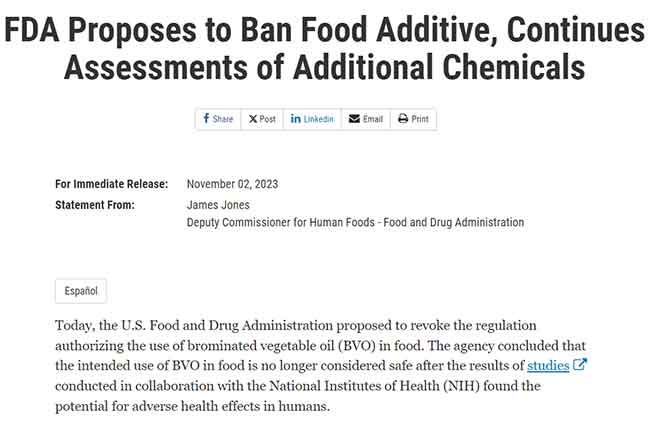
In a recent important proposal,the US Food and Drug Administration (FDA) announced a ban on the use of brominated vegetable oil (BVO) in food and continued to assess the safety of other chemical substances.Behind this proposal is a deep concern for human health and well - being,as well as the progress of scientific research.Below,we will delve into the legal background and potential impact of this policy change.
The FDA has extensive legal powers to regulate in accordance with the Federal Food,Drug,andThe Food,Drug,and Cosmetic Act (FD&C Act) regulates and ensures the safety of food in the U.S.market.According to this act,any food additive must receive FDA approval before use.The FDA defines a food additive as "any substance intentionally added during food processing," which may serve purposes such as improving food color,flavor,shelf life,etc.
Brominated vegetable oil was once classified as a substance "generally recognized as safe" (GRAS),but over time,concerns have arisen regarding the safety of BVO.Recently,the FDA conducted a priority review of BVO usage under Section 170.3 of Title 21 CFR,which outlines the safety assessment procedures for food additives.FDA scientists evaluated the potential health risks of the chemical based on available data and considered whether its use in food should be banned or restricted.
The legal action in California to ban the use of BVO foreshadowed the regulatory changes across the country.According to California regulations,the ban on the use of certain chemical substances is based on concerns about the potential health problems these substances may cause.Now,the FDAs proposal extends this ban to ensure that all US consumers do not ingest substances considered to have potential health risks.
In addition to BVO,the FDA is also reevaluating the use of FD&C Red No.3.According to Title 21 CFR Section 74.303,this color additive is specifically approved for coloring foods,drugs,and cosmetics.However,under Section 409(b)(3) of the FD&C Act,if any food additive is found to "reasonably" induce cancer,its use must be prohibited.Therefore,the FDA is assessing the risks associated with FD&C Red No.3 based on the latest scientific evidence and regulatory framework.
As scientific research progresses,legal rules must also evolve to reflect new understandings and protect consumers from potential chemical risks.This proposal by the FDA is an important exercise of its regulatory function.
For more details,please refer to:
Was this helpful? Give us a like!
Contact our experts for compliance audits, precise quotes, and one-stop customs support.
Recent Comments (0) 0
Leave a Reply