
Japan EV Battery Carbon Footprint Rules
or complex compliance issues.
clearance and fund security.
The rise of electric vehicles (EVs) has brought new environmental hope to the world,but it has also triggered strict regulations on environmental footprints.The Japanese government recently introduced new regulations on the carbon footprint of EV batteries,aiming to reduce carbon emissions in battery production and further promote low-carbon initiatives.If you are focused on how to compliantly introduce EVs or related battery products into the Japanese market,this article will provide detailed guidance.
I.Background and Implementation Plan of the New Regulations
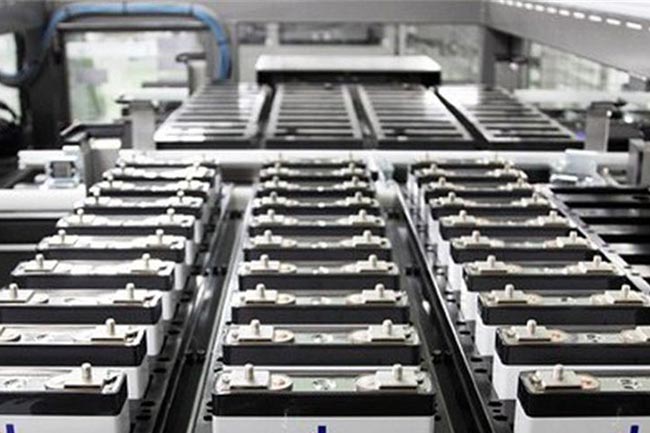
Recently,Japans Ministry of Economy,Trade and Industry (METI) announced a new plan requiring electric vehicle manufacturers selling in the Japanese market to calculate and report the carbon dioxide emissions generated during battery production.This requirement will be implemented in fiscal year 2024,initially mandating manufacturers to disclose information to qualify for government subsidies,with eventual emission caps set.Vehicles exceeding these limits will be ineligible for subsidies.This means companies must reduce carbon emissions across all battery production stages to ensure compliance with policy requirements.
II.Comparison with the EUs New Battery Law
Japan’s policy actually draws inspiration from the European Union’s new battery regulations.The EU plans to require battery manufacturers to disclose the carbon footprint of the entire battery life cycle from July 2024,including all stages from procurement and production to end-of-life processing.The carbon footprint calculations for these stages will cover everything from the extraction and transportation of raw materials to energy consumption during production,and finally to end-of-life and recycling processing,ensuring that carbon emissions at every step are meticulously recorded and disclosed.Starting from 2026,the EU will also require every battery sold to be accompanied by a "battery passport," which not only includes detailed information such as the battery’s model,chemical composition,and production date,but also covers the battery’s maintenance records,durability assessments,and recycling guidelines after disposal.Such information disclosure will further help consumers understand the full life cycle of batteries and make more environmentally conscious purchasing decisions.
The regulation aims to enhance battery traceability,reduce emissions,and provide comprehensive consumer information.It also seeks to standardize disclosures,driving the EV industry toward greater environmental transparency.Japans alignment with EU policies means businesses trading in both markets must meet similar carbon footprint standards,significantly increasingcompliance workloads,particularly in transparency and accuracy of carbon footprint calculations.Companies must ensure all battery production and usage meet emission standards while maintaining detailed records per Japanese and EU requirements for government and consumer audits.This demands greater resources for compliance management,data collection,and reporting to maintain market eligibility.
III.Data Disclosure and Consumer Transparency
Under the new rules,EV manufacturers must report battery production emissions data directly to METI,with eventual public disclosure.Japan intends to empower consumers with transparent carbon footprint information to encourage greener purchases.Forindustry players,these transparency requirements and stricter standards mean imported EVs must comply with Japans production-stage emission criteria.
IV.International Cooperation and Technical Barriers
To facilitate implementation,Japan will collaborate with the EU to establish unified battery emission standards,promoting global decarbonization.This cooperation aims to reduce compliance burdens for manufacturers,as noted by EU Environment Commissioner Virginijus Sinkevičius.
However,Japan also seeks to protect its domestic auto industry by raising technical barriers against foreign brands.Exporters must prioritize battery carbon footprint compliance and prepare documentation in advance to enter the Japanese market.
Countermeasures and Future Prospects
To adapt,EV manufacturers and importcompanies must take countermeasures like optimizing production processes,adopting low-emission materials,and reducing supply chain carbon footprints.They should also master carbon calculation methodologies and certification procedures to align with Japanese and EU standards,demonstrating commitments to environmental and social responsibility.
Was this helpful? Give us a like!
Contact our experts for compliance audits, precise quotes, and one-stop customs support.
Recent Comments (0) 0
Leave a Reply