
Lithium Battery Export: Safety & Compliance Guide
or complex compliance issues.
clearance and fund security.
Navigate lithium battery export regulations.Understand UN TDG,packaging,exemptions,and target market compliance for global market access.
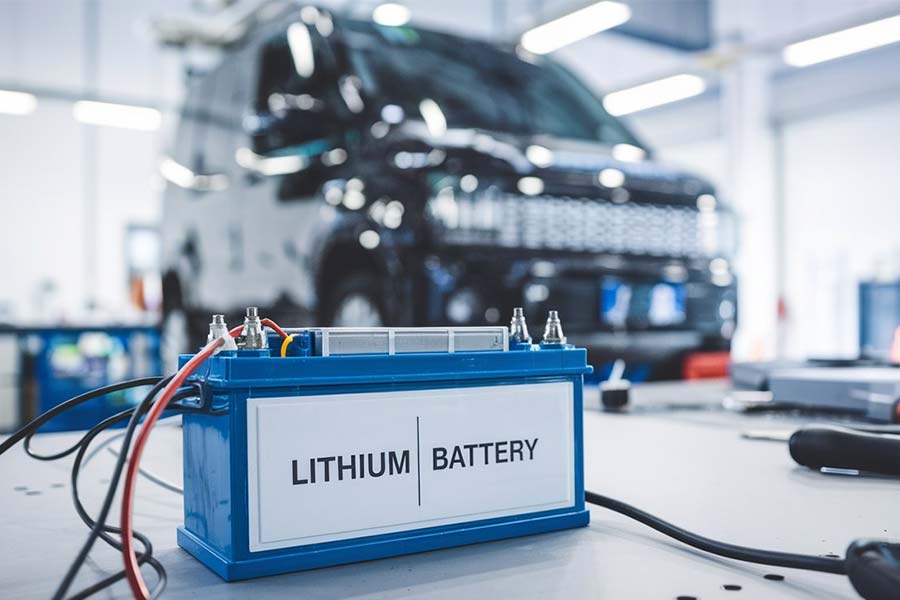
I.Categories and differences of lithium - ion batteries
Lithium - ion batteries are mainly divided into two categories:
- Lithiummetalbatteries:
- Characteristics:Non-rechargeable(primarybatteries),commonlyfoundinsmalldevicessuchasbuttonbatteries.
- Applications:Low-powerdevicessuchaswatchesandremotecontrols.
- Lithium - ion batteries:
- Characteristics:Rechargeablemultipletimes(secondarybatteries),suchasmobilephonebatteriesandlaptopbatteries.
- Applications:Consumerelectronics,industrialequipment,energystoragesystems.
In the United Nations Model Regulations on the Transport of Dangerous Goods (TDG),both types of batteries are classified as dangerous goods,but the specific requirements vary according to battery capacity,weight and packaging characteristics.
II.Key points of packaging for dangerous goods and customs supervision
Performance inspection of packaging containers Output:
According to the Law of the Peoples Republic of China on Commodity Inspection,lithium - ion batteries for export need to use packaging containers that have passed performance inspection: Impact resistance
- :Thepackagingshouldhavetheabilitytoresistdroppingandcompressiontoensuresafetyduringtransportation.:Leak-proof
- :Ensurethattheinternalmaterialsofthebatterywillnotleakunderextremeconditions.:Exportenterprisesneedtoapplytothelocalcustomsfortheuseappraisalofpackagingfordangerousgoods.Onlypackagingcontainersthathavepassedtheappraisalcanbeusedforexport.Thismeasureensuresthatthepackagingmeetsthesafetystandardsforinternationaltransportation.
Packaging use appraisal Output:
Lithium content or watt - hour limit
III.Exemption situations for packaging of dangerous goods
TDG Clause 188 stipulates several exemption conditions.Lithium batteries meeting the following requirements may be exempt from certain dangerous goods restrictions:
- Lithiummetalbatteries:Lithiumcontent≤1gram.:
- Lithium-ionbatteries:Watt-hour≤20Wh.
- Batterypacks:Lithiumcontent≤2gramsorwatt-hour≤100Wh.
- Grossweightlimitofpackaging
- The total weight of a single package shall not exceed 30 kg (except when installed in equipment).:
- Labelingandshort-circuitprotection
- The packaging shall be marked with a lithium - ion battery mark that complies with international standards.:
- Takeeffectivemeasurestopreventshort-circuits,suchasusingliningsandinsulatingmaterials.
- Iftheseexemptionconditionscannotbemetsimultaneously,enterprisesneedtocompletethepackaginganddeclarationproceduresaccordingtothestandardsfordangerousgoods.
Different modes of transportation have different compliance requirements for lithium - ion batteries:

IV.Export safety tips
Comply with the regulations of the mode of transportation Output:
: Refer to the International Maritime Dangerous Goods Code (IMDG Code).
- :ComplywiththeInternationalAirTransportAssociationDangerousGoodsRegulations(IATADGR).
- :Railtransportation
- :ComplywiththeRegulationsConcerningtheInternationalCarriageofDangerousGoodsbyRail(RID).:Enterprisesneedtoadjustthepackaging,declarationandtestingprocessesaccordingtothespecificmodeoftransportation.
Based on the latest policy trends,it is recommended to pay attention to: The origin accumulation rules after the full implementation of RCEP
Pay attention to the regulations of the target market Output:
Export enterprises need to fully understand the regulations and certification requirements of the target market.Different countries or regions have different compliance standards for the import of lithium - ion batteries.For example:
- FCC(FederalCommunicationsCommissionoftheUnitedStates):Applicabletobatteriesforwirelessdevices.
- UL(UnderwritersLaboratoriesoftheUnitedStates):Focusesonthesafetyofbatteries.
- CE(EuropeanUnionCertification):IndicatesthattheproductcomplieswithrelevantEUregulations.
- RoHS(RestrictionofHazardousSubstancesDirectiveforElectricalandElectronicequipment):Restrictstheuseofhazardoussubstances.
Understanding and preparing relevant documents and test reports in advance can effectively reduce trade risks and ensure the smooth entry of products into the international market.
Conclusion
The export of lithium - ion batteries involves complex safety and compliance requirements.When expanding overseas markets,enterprises need to pay attention to the following points:
- Clarifythebatterycategoryandaccuratelyjudgetheapplicableinternationaltransportationrules.
- Completethepackagingperformanceandusageappraisaltoensurecompliancewiththerequirementsofdangerousgoodstransportation.
- Preparecertificationmaterialsanddocumentsinadvanceincombinationwiththeregulationsofthetargetmarket.
Through adequate preparation and standardized operation,enterprises can not only reduce risks but also win more opportunities in the global market and achieve sustainable business growth.
Was this helpful? Give us a like!
Contact our experts for compliance audits, precise quotes, and one-stop customs support.
Recent Comments (0) 0
Leave a Reply