
Exporting to Russia: Navigating Sanctions & Sensitive Goods
or complex compliance issues.
clearance and fund security.
In recent years,as the sanctions imposed by the United States and the European Union on Russia have become more severe,some products exported from China to Russia have encountered serious restrictions inaspects.Forenterprises,especially those export companies involved in sensitive products,compliance and risk management have become particularly important.Today,lets talk about which products may face restrictions when exported to Russia and how to better deal with these compliance risks.
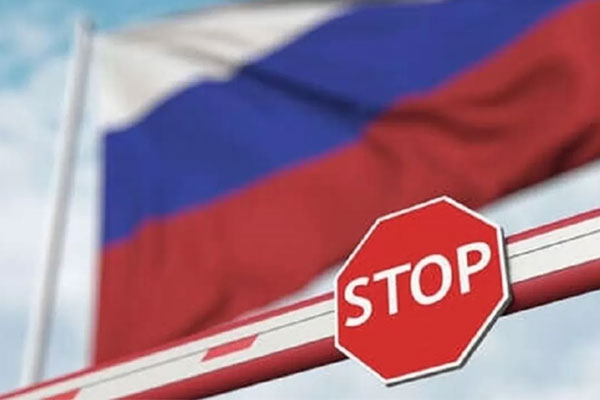
I.Definition and Risks of Sensitive Products
Under the current international situation,some products considered related to the Russian weapon system are designated assensitive products.Once these products appear in the proforma invoice (PI),contract,bill of lading,customs declaration form,as well as chat records and inquiry records,it is very likely that the payment for goods cannot be smoothly credited.This situation not only affects the liquidity of trade funds but also brings many uncertainties and potential legal risks to both trading parties.
Sensitive products mainly include electronic components,mechanical parts,manufacturing and testing equipment used in the Russian weapon system.These products involve a wide range of classifications and tariff numbers.The following is a specific arrangement and explanation.
II.Classification of Sensitive Products and Tariff Numbers
Integrated Circuits and Related Electronic Components Output:
First Level: Electronic Integrated Circuits
This part of the products is crucial to the Russian weapon system,and there are limited global manufacturers.The following are some key tariff numbers:
- 8542.31:ProcessorsandControllers
- 8542.32:Memories
- 8542.33:Amplifiers
- 8542.39:OtherelectronicIntegratedCircuits
Second Level: Wireless Communication and Passive Electronic Components
- 8517.62:DataReception,Conversion,Transmission,orRegenerationEquipment
- 8526.91:RadioNavigationAids
- 8532.21:TantalumCapacitors
- 8532.24:MultilayerCeramicDielectricCapacitors
- 8548.00:ElectricalPartsofMachineryorEquipment
Machinery and Other Electronic Components Output:
Third Level A: Common electronic Components
These electronic components are widely used in the Russian weapon system,and there is a relatively wider range of suppliers to choose from:
- 8471.50:ProcessingDevices
- 8504.40:StaticConverters
- 8517.69:TransmissionorReceivingEquipment
- 8525.89:TelevisionCameras,DigitalCameras
- 8529.10:AntennasandAntennaReflectors
- 8536.69:Connector
- 8541.10:Diode
- 8541.51:Semiconductor-basedsensors
Level 3 B: Mechanical components
These components are also used in Russian weapon systems,involving mechanical and other related components:
- 8482.10:Ballbearings
- 8482.30:Self-aligningrollerbearings
- 8807.30:Othercomponentsofaircraft,helicoptersordrones
- 9013.80:Opticalequipment
- 9014.20:Aviationoraerospacenavigationinstrumentsandequipment
Manufacturing and Testing Equipment Output:
Level 4 A: Manufacturing and quality inspection equipment
These equipment are used to manufacture electronic components,circuit boards and modules,ensuring that product quality meets standards:
- 8486.10:Machinesandequipmentformanufacturingwafersorchips
- 8486.40:Machinesformanufacturingorrepairingreticlesandphotomasks
- 9030.32:Multimeterswithrecordingdevices
Level 4 B: CNC machine tools and components
- 8457.10:Metalprocessingcenters
- 8458.11:CNChorizontallathes
- 8459.61:CNCmillingmachines
III.How to Deal with Trade Compliance Risks?
When exporting to Russia,companies dealing with the aforementioned sensitive products must exercise extra caution to ensure that keywords related to these sensitive items are avoided in all types of documents and trade paperwork.Additionally,companies should take the following measures:
- Strengtheninternalcompliancereview:Ensurethateveryorderundergoesstrictcompliancechecksbeforeexecution,includingitem-by-itemreviewofcontracts,invoices,customsdeclarationsandotherdocuments.
- Payattentiontointernationalpolicydynamics:CloselymonitorchangesinsanctionspoliciesagainstRussiabytheUnitedStates,theEuropeanUnionandothercountries,andadjustexportstrategiesinatimelymanner.
- Maintaincommunicationwithbanks:Duringtheprocessofcollectingforeignexchange,maintainclosecontactwithbankstoensurethattheotherpartyisawareofthenatureofthegoodsandthetradebackground,soastoreducetheriskoffundsbeingfrozen.
- Seekprofessionaladvice:Fortheexportofcomplexsensitiveproducts,itisrecommendedtoseekthehelpofprofessionalcomplianceconsultingcompaniestoensurethateverystepoftheoperationcomplieswithrelevantregulations.
Summary
With the continuous change of the international situation,sensitive products exported to Russia face many challenges in terms of trade compliance.By clarifying product classification and tariff numbers,and understanding international sanctions policies,foreign trade enterprises can effectively reduce trade risks and ensure the smooth collection of funds.I hope this article has provided you with some useful information to help you navigate the complex international trade environment with ease.
Was this helpful? Give us a like!
Contact our experts for compliance audits, precise quotes, and one-stop customs support.
Recent Comments (0) 0
Leave a Reply