
Canada Stroller Regulations: Compliance Guide for 2023
or complex compliance issues.
clearance and fund security.
Understand Canada’s new stroller regulations (SOR/2023-101) for mechanical,coating,toxicological,phthalate,and warning requirements.Ensure your products comply.
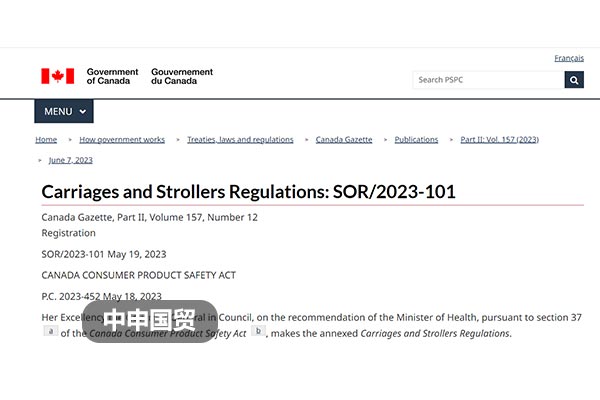
Mechanical Requirements: The product must meet the relevant requirements in ASTM F833 (Consumer Safety Performance Specification for Horizontal and Sit - in Strollers) and ISO 31110 (Wheeled Child Pushchairs - Folding Strollers and Prams - Requirements and Test Methods).
Coating Material Requirements: The new regulations clearly define the relevant requirements,including restrictions on stickers,films or other removable materials,and surface coating materials.
Toxicological Requirements: The new regulations directly list the toxicological requirements specified in Sections 22 and 25 of the Toy Regulations,allowing the use of existing median lethal dose and median lethal concentration data without the need for animal testing.
Phthalate Requirements: The new regulations set content limits for phthalates,and specific phthalates shall not exceed 1000mg/kg.
Information and Warning Requirements: The information and warning requirements in the new regulations can be found in ASTM F833 or ISO 31110,but not all information and warnings that meet these two standards meet the new regulations.
Therefore,for companies exporting to Canada,they need to take advantage of the transition period to clear inventory in a timely manner to prevent losses of raw materials and finished products.At the same time,they also need to pay close attention to changes in relevant regulations and standards,and adjust product design and manufacturing processes in a timely manner to ensure product compliance.In addition,they should also attach importance to product inspection,expand the factory - qualified inspection items to all the contents specified in the regulations,and send the products to a qualified third - party laboratory for testing when necessary to prevent losses caused by product returns,recalls,and foreign notifications.
Australia Will Implement New Chemical Import and Export Authorization Management Regulations
Was this helpful? Give us a like!
Contact our experts for compliance audits, precise quotes, and one-stop customs support.
Recent Comments (0) 0
Leave a Reply