
ASEAN Trade: Customs Facilitation & Consumer Tax
or complex compliance issues.
clearance and fund security.
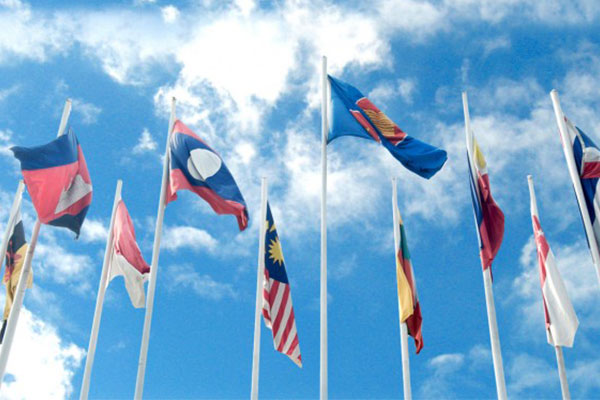
With the rapid development of the Southeast Asian Economic Community and the advancement of regional integration,the customs clearance policies of ASEAN countries undoubtedly have a profound impact on trade flows and economic cooperation both within and outside the region.But what do these changes mean?For multinational enterprises,local producers,and ordinary consumers,how will these policies reshape their business environment and economic behavior?
I.Mutual Recognition Arrangement for Authorized Economic Operators
On January 18,2024,the mutual recognition arrangement for Authorized Economic Operators (AEOs) signed between Singapore and Malaysia marked another major step forward in customs clearance facilitation between the two countries.The AEO system,promoted by the World Customs Organization,is an international standard aimed at facilitating the rapid clearance of goods by ensuring the security and convenience of the supply chain.Under this mutual recognition arrangement,AEO exporters certified by one country will enjoy faster customs clearance procedures in the other country,including reduced customs inspections and simplified documentation requirements.
This measure will not only reduce the logistics costs of enterprises and improve the efficiency of cross - border trade but also indicates that other ASEAN member states may follow suit and implement similar mutual recognition arrangements.For enterprises,becoming an AEO member will become a key strategy to enhance competitiveness and expand the regional market.
II.Consumption Tax Policy for Low - Cost Products
From January 1,2024,the Malaysian government will implement a consumption tax policy for low-cost products (LVG),imposing a 10% sales tax on imported products (except for cigarettes) sold online at prices below 760 RMB.This measure is primarily aimed at supporting the development of domestic small and medium-sized enterprises.The implementation of this policy means that major e-commerce platforms in Southeast Asia,such as Shopee,AliExpress,and Lazada,will begin charging consumers an additional sales tax.
This move undoubtedly increases the operating costs and price competition pressure for domestic and foreign e - commerce platforms and sellers.However,from another perspective,it also prompts local producers to enhance their competitiveness,promotes the transfer of consumers to local products,and thus balances the domestic market and protects small and micro - enterprises.
III.Facilitation of Cross - border Goods Clearance
On February 7,2024,Thailand and Cambodia signed a memorandum of understanding on cargo transit,aiming to simplify the transit of goods between the two countries and improve customs clearance efficiency.This not only helps to strengthen the trade relations between Thailand and Cambodia,but also has a positive impact on the optimization of logistics and supply chains in the entire ASEAN region.Simplified customs clearance procedures mean lower costs and shorter timeframes,which are particularly important for industries that rely on rapid cargo circulation.
In addition,Indonesias new policies promote the import and use of electric vehicles by providing financial incentives,such as exemption from import tariffs and luxury goods sales tax.At the same time,the implementation time of the local component index (TKDN) for electric vehicles has been adjusted,which reflects the flexibility and determination of the Indonesian government in promoting the development of environmentally friendly vehicles.This series of policies not only provide more development space for the electric vehicle industry,but also offer new opportunities for investment and innovation in related industries.
The implementation of these policies has not only changed the operation models of enterprises,but also affected consumers shopping habits and choices.For enterprises,understanding and adapting to these changes is the key to ensuring their competitiveness in a dynamically changing business environment.
Was this helpful? Give us a like!
Contact our experts for compliance audits, precise quotes, and one-stop customs support.
Recent Comments (0) 0
Leave a Reply