
Charging Equipment Export: Requirements & Compliance
or complex compliance issues.
clearance and fund security.
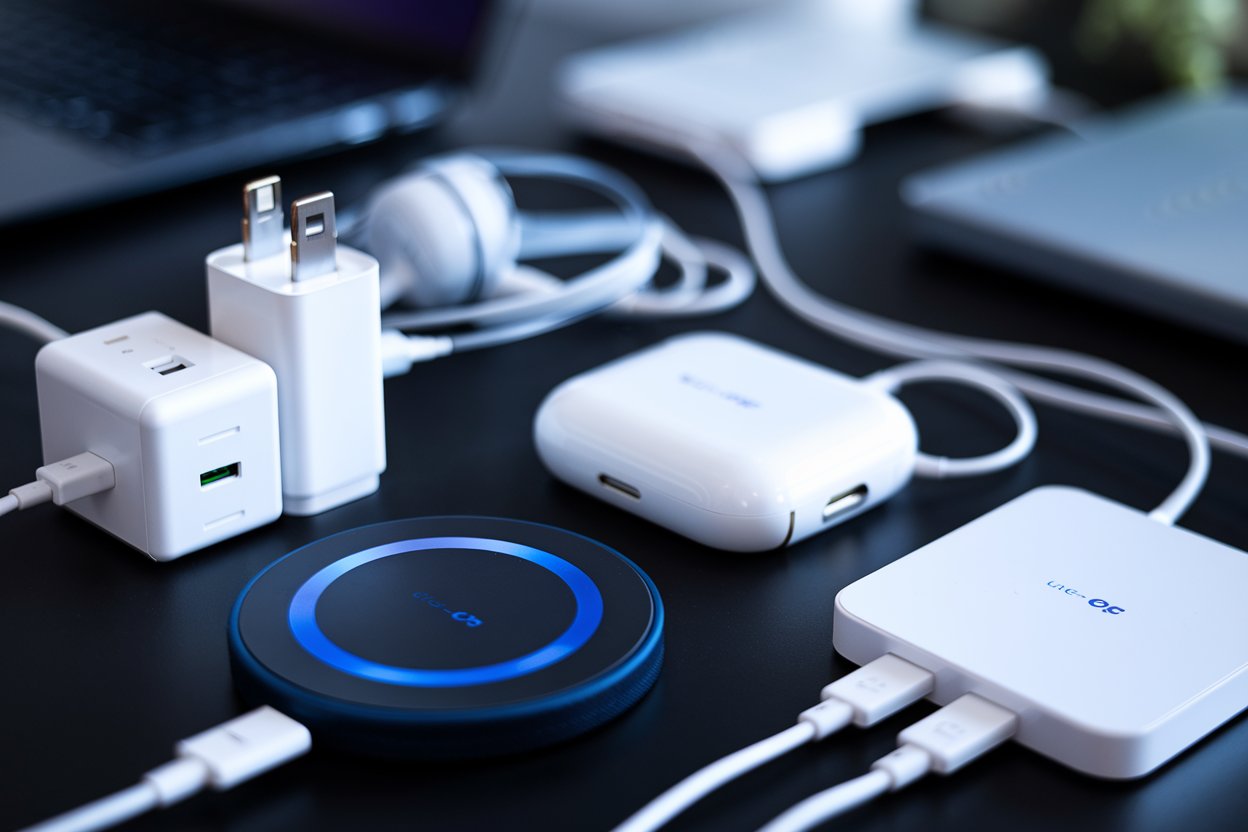
With the advancement of global technology,the demand for charging devices has been increasing year by year.From power adapters to wireless charging pads,and even electric vehicle charging stations,various charging devices are widely used in daily life and industrial applications.To help enterprises smoothly conduct export business for charging devices,this article will detailthe relevant requirements and considerations to ensure compliance and efficient customs clearance.

I.Types of Charging Devices and HS Code Classification
According to the latest HS Code directory,various charging devices should be classified based on their specific functions and uses,as follows:
Power Adapters
- HScode:8504.40.99
- ClassificationBasis:
- Heading8504:Electricaltransformers,staticconverters(e.g.rectifiers),andinductors.
- Subheading8504.40:Staticconverters.
- SpecificCode8504.40.99:Otherstaticconverters.
- Reasonforclassification:Apoweradapterisadevicethatconvertsalternatingcurrent(AC)todirectcurrent(DC),providingsuitablevoltageandcurrentforelectronicdevices,whichalignswiththedescriptionofHeading8504.
Earphone Charging Cases
- HScode:8507.60.00
- ClassificationBasis:
- Heading8507:Electricaccumulators,includingseparators,whetherornotrectangular(includingsquare).
- Subheading8507.60:Lithium-ionaccumulators.
- Reasonforclassification:Earphonechargingcasesareprimarilyusedtochargewirelessearphones,typicallycontainingbuilt-inbatteriesandchargingcircuits,whichalignswiththedefinitionofstaticconverters.
Wireless Charging Pads
- HScode:8543.70.99
- ClassificationBasis:
- Heading8543:Otherelectricalequipmentandapparatuswithindependentfunctions,notelsewherespecified.
- Subheading8543.70:Othermachinesandapparatuswithindependentfunctions.
- Specificcode8543.70.99:Otherelectricalequipmentwithindependentfunctions,notelsewherespecified.
- Reasonforclassification:Wirelesschargingpadstransmitelectricalenergywirelesslytoelectronicdevicesthroughelectromagneticinductionormagneticresonance,conformingtothedescriptionofstaticconverters.
DC charging piles (fast charging)
- HScode:8504.40.99
- ClassificationBasis:
- Heading8504:Electricaltransformers,staticconverters,andinductors.
- Subheading8504.40:Staticconverters.
- SpecificCode8504.40.99:Otherstaticconverters.
- Reasonforclassification:DCchargingpilesconvertalternatingcurrenttohigh-voltagedirectcurrenttoprovidefastchargingforelectricvehicles,meetingthedefinitionofstaticconverters.
AC charging piles (slow charging)
- HScode:8537.10.90
- ClassificationBasis:
- Heading8537:Electricalcontrolordistributionboards,panels,consoles,cabinets,andotherbasesequippedwithtwoormoredevicesofheading8535or8536.
- Subheading8537.10:Forequipmentwithavoltagenotexceeding1,000volts.
- Specificcode8537.10.90:Othercontrolordistributionapparatusforequipmentwithavoltagenotexceeding1,000volts.
- Reasonforclassification:ACchargingpilesaremainlyusedtoprovidealternatingcurrentforelectricvehicles,wherethevehiclesinternalchargerthenconvertstheACtoDC.Theirprimaryfunctionispowercontrolanddistribution,aligningwiththedescriptionofheading8537.

II.Declaration Elements and Considerations for Exporting Charging Devices
In the export process of charging equipment,accurate declaration and compliant operations are crucial.Below are the key declaration elements and specific matters that enterprises need to pay attention to during export:
1.Declaration elements
- ProductName:Clearlyspecifythenameoftheequipment,suchas"poweradapter,earphonechargingcase,wirelesschargingpad,DCchargingpile,ACchargingpile,"etc.
- Brandtype:Suchas"domesticbrands,jointventurebrands,"and"importedbrands."
- PreferentialTreatmentStatusforExports:Whethertoenjoyortariffpreferences.
- Purpose:Usedtoprovidechargingfunctionsforelectronicdevices,electricvehicles,etc.
- Function:Provideadetaileddescriptionofthedevice’sfunctionsandworkingprinciples,suchas"chargingelectronicdevicesthroughwirelesselectromagneticinduction,convertingACpowertoDCpowerforelectricvehiclecharging,"andsoon.
- Brand(Chineseorforeignname):Providethebrandinformationoftheequipment.
- Model:Fillinthespecificmodeloftheequipment.
- OtherInformation:Includethetechnicalparametersandmaterialsoftheequipment.
2.Regulatory requirements
- EnvironmentalCompliance:Chargingequipmentinvolvesenvironmentalcomplianceissuesduringexport.Somecountrieshavestrictrequirementsontheenvironmentalperformanceofequipment.Enterprisesshouldensurethatexportedequipmentcomplieswiththeenvironmentalstandardsofthedestinationcountry,suchasenergyefficiencyratingsandrestrictionsonhazardoussubstancesinelectronicdevices(e.g.theEUsROHSDirective).
- CertificationRequirements:Somecountriesorregionsrequireimportedchargingequipmenttohaverelevantcertifications,suchasCEcertification(EUmarket)orULcertification(NorthAmericanmarket),toensurethesafetyandenvironmentalcomplianceoftheequipmentduringuse.
3.Document Preparation
- Exportinvoice,packinglist,Bright,qualitycertificateDocumentssuchastheseareessentialfortheexportofchargingequipment.Enterprisesmustensuretheaccuracyandcompletenessofthesedocuments.
- TechnicalDocumentation:Includetheequipmentsoperationmanual,technicalspecifications,etc.toprovidedetailedoperationalguidanceforcustomersinthedestinationcountry,facilitatingcustomsclearanceandsubsequentuse.
III.Market Access Requirements and Compliance in Various Countries
Different countries have varying market access requirements for charging equipment,particularly in terms of environmental protection,energy efficiency,and equipment safety.Enterprises should fully understand the requirements of the target market before exporting.
EU Market
- CECertification:TheEUrequiresCEcertificationforchargingequipmenttoensurecompliancewithhealth,safety,andenvironmentalstandardsintheEuropeanmarket.
- Environmentalprotectionrequirements:MustcomplywithEUenvironmentalregulationssuchastheROHSDirectiveandWEEEDirectivetocontroltheuseanddisposalofhazardoussubstances.
US Market
- ULcertification:IntheNorthAmericanmarket,chargingdevicestypicallyrequireULcertificationtoensurecompliancewithUSelectricalsafetystandards.
- EnergyStar:SomechargingdevicesmayneedtomeetEnergyStarenergyefficiencystandardstoensureenergyconservationandenvironmentalprotection.
Emerging Markets
- ForsomeemergingmarketssuchasSoutheastAsiaandLatinAmerica,inadditiontobasicsafetycertifications,attentionshouldalsobepaidtothedestinationcountrysregulationsondeviceperformanceandenvironmentalrequirements,particularlyinenergyefficiencyandelectronicproductrecycling,assomecountriesmayhavespecificregulations.

IV.Other Considerations for Exporting Charging Devices
Ensure Compliance and Environmental Protection
Before exporting charging devices,enterprises should ensure that all indicators of the devices comply with the laws and regulations of the destination country,especially in terms of environmental protection and energy efficiency.Some countries have strict requirements on the environmental performance of electronic devices,such as restricting the use of hazardous substances and improving energy efficiency grades.Enterprises must ensure that exported devices meet these standards to avoid customs clearance issues due to environmental concerns.
Prepare Product Certifications in Advance
For charging devices that require product certifications,enterprises should contact certification bodies for relevant certifications such as CE and UL before export to ensure all certification documents are complete.Preparing certifications in advance can avoid export delays due to non-compliance.
3.The Role of the Company
In the process of exporting charging devices,choosing an experienced export agency can effectively reduce risks and uncertainties.The agency can assist enterprises in preparing export documents,obtaining product certifications,coordinating logistics and customs clearance,and ensuring a smoother and more efficient export process.Especially for first-time exporters,the agency can provide professional consulting services to help enterprises navigate the complex regulations and market requirements of different countries.
Summary
The export of charging devices involves multiple stages and complex compliance requirements,from device classification and HS codes to specific market access requirements of various countries.Enterprises must be well-prepared at each stage to ensure exported devices meet the standards and regulations of the target market.By partnering with an experienced export agency,enterprises can effectively reduce export risks and successfully sell charging devices in global markets to meet diverse customer needs.
Was this helpful? Give us a like!
Contact our experts for compliance audits, precise quotes, and one-stop customs support.
Recent Comments (0) 0
Leave a Reply