
Fumigation in Foreign Trade: Essential Process & Compliance
or complex compliance issues.
clearance and fund security.
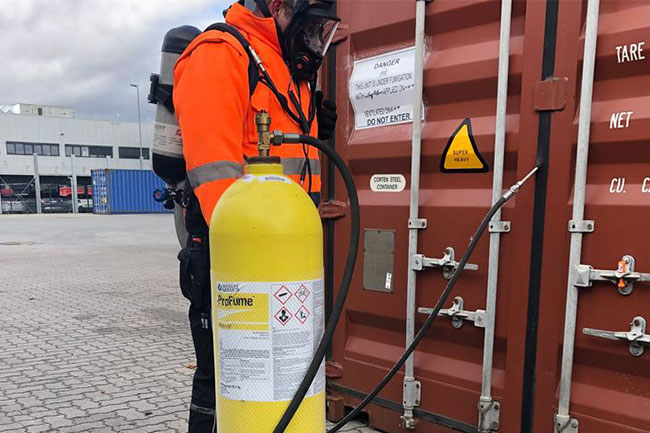
Fumigation isa commonly used disinfection and pest - elimination treatment method inagricultural products,wood,and packaging materials to eliminate potentially harmful organisms and ensure the safe entry and exit of goods.The following is a detailed introduction to the fumigation process in foreign trade:
Purpose
Prevent the spread of harmful organisms: Fumigation can effectively eliminate pests,pathogens,and other harmful organisms in goods,preventing their spread between different countries and regions.
Meet the requirements of the importing country: Many countries have strict quarantine requirements for imported agricultural products and wood,and fumigation is one of the necessary conditions for obtaining import permits.
Commonly used fumigants
Methamidophos: It is a widely used fumigant with a good killing effect on most pests.
Hydrogen sulfide: It is mainly used to treat grains and other agricultural products.
Others: Such as chloroform,dibromochloropropane,etc.
Fumigation process
Sealing: Ensure that the goods are completely sealed,usually using special fumigation tents or containers.
Injecting fumigant: Select the appropriate fumigant and determine the dosage according to the type,quantity of goods,and target pests.
Maintaining: Maintain the concentration of the fumigant for a certain period of time to ensure that all pests are completely killed.
Ventilation: After the fumigation is completed,open the sealed tent or container to allow the fumigant to disperse completely.
Inspection: Confirm that all pests have been killed and check the quality of the goods to ensure that they have not been damaged by the fumigant.
Precautions
Safety: Fumigants are usually toxic,and appropriate protective measures should be taken during operation to avoid harm to the human body and the environment.
Effect: Select the appropriate fumigant and method to ensure that the fumigation effect meets expectations.
Certificate: After completing the fumigation,it is usually necessary to obtain a fumigation certificate from the relevant department to prove that the goods have been properly treated.
Was this helpful? Give us a like!
Contact our experts for compliance audits, precise quotes, and one-stop customs support.
Recent Comments (0) 0
Leave a Reply