
How to Export Electric Fans to EU: Certification Guide
or complex compliance issues.
clearance and fund security.
With improving living standards,electric fans are increasingly used in industrial,commercial,restaurant,travel,and household settings.In daily life,people often need portable electric fans to cool down during hot weather.If your company wants to export electric fans to the EU market,certain certifications are required.Below,we detail the electric fanrequirements for CE certification and RoHS testing,as well as the specific application process.
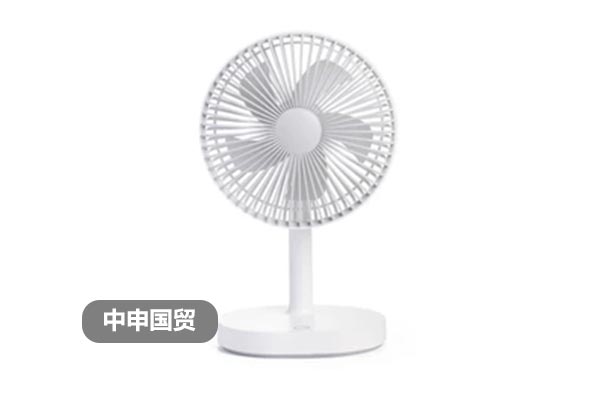
First,completeCE CertificationIn the EU market,the "CE" mark is a mandatory certification indicating that a product complies with the essential requirements of the EU’s "New Approach to Technical Harmonization and Standards" directives.Electric fans must undergo testing under the CE-EMC Directive and the CE-LVD Directive,and may also need to meet the requirements of the General Product Safety Directive (GPSD).The EMC electromagnetic compatibility testing standards are EN55014 and EN61000.If the voltage falls within the range of 50-1000V AC or 75-1500V DC,the LVD Directive applies,with EN60335 serving as the safety standard for electrical and electronic equipment under the LVD.
Next,completeRoHS testingAlso known as environmental certification.RoHS is a mandatory standard established by EU legislation,which sets limits on hazardous substances such as lead,mercury,cadmium,hexavalent chromium,polybrominated biphenyls (PBB),polybrominated diphenyl ethers (PBDE),and phthalates in electrical and electronic products.
The application process for CE certification includes the following steps:
The manufacturer submits an application
Fill out the CE marking application form
Submit relevant technical documents and confirm the quotation
Send samples for testing,pay the certification fees,and await product testing and technical document review [Technical document review includes: whether the documents are complete; whether the documents are written in an official EU language (English,German,or French)]
If improvements are needed,make modifications based on the laboratorys feedback and pay the rectification fees
Finally,obtain the test report or technical documents,CE compliance certificate,and CE mark,then affix the CE label to the product
The process of RoHS testing includes:
Find a qualified and capable third-party accredited laboratory
Fill out the RoHS test application form
Send the samples to the laboratory
Pay the testing fees and await the test results.
Before sending products for testing,the manufacturer needs to disassemble and package the products in detail,marking the product name and number on each package.Products made of metal,plastic,and other materials require different tests.The entire process requires close collaboration between the manufacturer and the laboratory to ensure the products meet EU safety and environmental requirements,thereby smoothly entering the EU market.
Was this helpful? Give us a like!
Contact our experts for compliance audits, precise quotes, and one-stop customs support.
Recent Comments (0) 0
Leave a Reply