
CE Marking for EU Home Appliance Exports
or complex compliance issues.
clearance and fund security.
CE Certification — The Pass for Household Electrical Appliances Exported to the EUCE certification is a necessary condition for household electrical appliances products to enter the EU market.It is not only a safety certification mark,but also a statement of legal compliance.Before household electrical appliances products are put on the EU market,they must be affixed with the CE mark,indicating that the products meet the EUs basic safety,health,environmental protection and consumer protection requirements.Clarify the directive requirements:
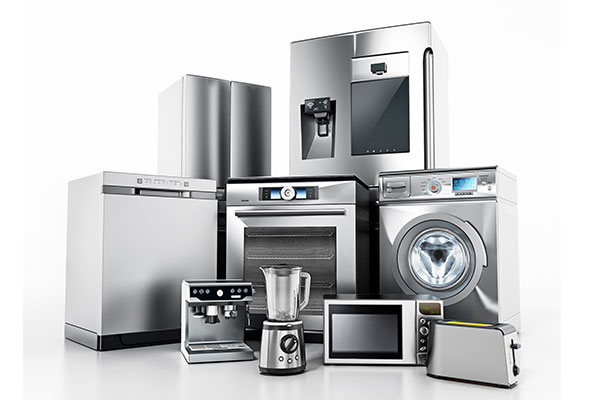
Household electrical appliances products need to meet the Low Voltage Directive (LVD),Electromagnetic Compatibility Directive (EMCD),Energy - related Products Directive (ErP),RoHS Directive and Waste Electrical and Electronic Equipment Directive (WEEE).
Select the certification mode:
Implementation Steps:
According to the product characteristics,select an appropriate mode from the 8 certification modes of the New Approach Directive for conformity assessment.Make and affix the CE mark:
After conformity assessment,the manufacturer needs to make or affix the CE mark on the product by itself.Low Voltage Directive (LVD)
It involves the safety requirements of electrical equipment,such as protection against electric shock and overheating protection.Household appliances need to follow the corresponding EN 60335 series of standards,for example,EN 60335 - 1 is the general safety standard.It involves electromagnetic interference and immunity.Household electrical appliances products need to follow the corresponding EN 55014 series of standards to ensure that they will not have an adverse impact on the electromagnetic environment.
Energy - related Products Directive (ErP) — Improving the Energy Efficiency Level of Household Electrical Appliances Products
The ErP Directive stipulates the energy efficiency standards that household electrical appliances products should reach in the design and production stages.According to the requirements of the directive,household electrical appliances products need to undergo specific energy efficiency tests,such as energy consumption tests in standby and off states,and affix an energy efficiency label on the product.At present,the EU has officially announced 34 ErP implementation measures,of which 13 are related to household appliances.The specific requirements are as follows:
Electromagnetic Compatibility Directive (EMCD)
RoHS Directive — An Important Indicator of Environmental Protection
The RoHS Directive restricts the use of hazardous substances in electrical and electronic products.Household appliances need to meet the requirements of not containing or limiting the content of toxic substances such as lead,mercury,cadmium and hexavalent chromium.
Waste Electrical and Electronic Equipment Directive (WEEE) — Management of Electronic Waste

The WEEE Directive aims to improve the recycling rate of waste electrical and electronic products and reduce environmental pollution.Household electrical appliances products need to meet the corresponding recycling and treatment requirements,such as the establishment of identification and recycling systems.
Customs Reminder — Key Points for Export Enterprises to Note

Information collection:
Closely follow the dynamics of EU technical measures and understand the latest certification requirements.

Quality and safety:
Establish a strict quality control system to ensure that products meet the quality and safety requirements of the EU.Notification and comment:
Participate in the WTO notification and comment work,understand and influence the formulation of relevant standards.The certification process for household electrical appliances exported to the EU is both complex and cumbersome,but it is an essential step to ensure product quality and compliance with the regulatory requirements of the target market.Understanding and strictly following these certification processes is the key for export enterprises to open the door to the EU market.
The Whole Process of Industrial Trolley Export to RussiaUnderstand the Certification Process and Requirements for Household Electrical Appliances Exported to the EU | Shanghai Import/Export Agent
Can the domestic freight of exported goods apply for tax refund?How can enterprises ensure the compliant deduction of input tax on freight?This article deeply interprets tax policies to help you clarify the key points of domestic freight tax refund.
Was this helpful? Give us a like!
Contact our experts for compliance audits, precise quotes, and one-stop customs support.
Recent Comments (0) 0
Leave a Reply