
ASEAN Economic Community: New 2026-2030 Plan
or complex compliance issues.
clearance and fund security.
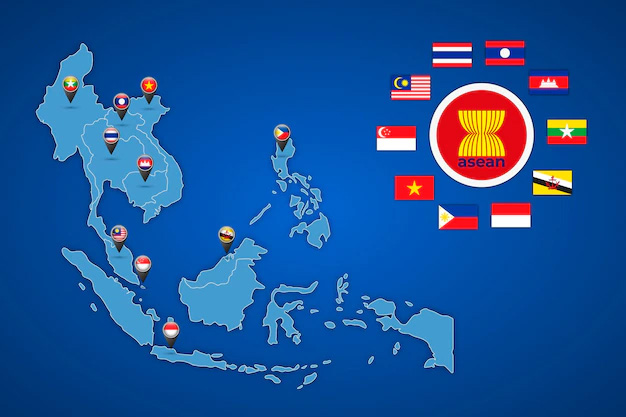
October 14,2024 News —— According to a report by The Nikkei,ASEAN (Association of Southeast Asian Nations) is actively drafting a new implementation plan framework for the ASEAN Economic Community (AEC),aiming to further integrate the regional market and promote economic digitalization and decarbonization.The draft covers the main goals from 2026 to 2030,with rich content and more than 200 specific implementation plans.
Six Major Goals Guide Future Development
The new plan draft clearly puts forward six major goals,including creating an environment to promote technological innovation,attracting investment to develop a green economy,and building a food security guarantee mechanism,etc.These goals aim to enhance the overall competitiveness of ASEAN and promote sustainable development within the region.To achieve these goals,ASEAN countries plan to build a cross - border renewable energy supply chain,reduce the difficulty for enterprises to provide financial services in multiple countries,and smoothly carry out trade activities through digital means.
Electric Vehicles and Infrastructure Construction
While promoting economic digitalization,ASEAN countries will jointly build an electric vehicle supply chain and relevant infrastructure.These measures will not only help promote the development of the green economy within the region but also enhance ASEANs competitiveness in the global electric vehicle market.
Laos Leads the Renewable Energy Transformation
As one of the ASEAN member states,Laos actively promotes the development of renewable energy and positions itself as the battery of Southeast Asia.The country has started supplying electricity generated by hydropower to Singapore and plans to export electricity generated by wind power to Vietnam.The new target content includes not only the effective utilization of existing infrastructure but also the expansion of decarbonization - related business activities within the region.
Cross - border Settlement and Digital Payment
ASEAN also plans to promote the construction of a cross - border settlement system and expand the area where QR code payment can be used uniformly.This will greatly improve the convenience of trade within the region and promote the process of economic integration.
Phased Promotion and Project Progress
Since its establishment in 2015,the ASEAN Economic Community has adopted a strategy of phased advancement of regional economic integration,gradually achieving market integration through measures such as tariff reductions.According to the latest data,the 10-year plan covering five fields and more than 1,600 projects until 2025 includes trade liberalization and intellectual property protection.By the end of 2023,96% of the projects have made progress.
Achieving a Single Market and Labor Mobility Liberalization
The next goal is to achieve a single market.ASEAN countries will promote the liberalization of skilled labor mobility and other issues,and accelerate the comprehensive integration of regional markets.According to ASEAN diplomatic sources,as of October 4th,the progress of formulating new goals has reached 70%.All countries will continue to discuss them at the upcoming summit and strive to formally adopt them at the 2025 Malaysia Summit.
Regional and Extra - regional Economic Cooperation
As one of the goals of the ASEAN Economic Community,the Regional Comprehensive Economic Partnership Agreement (RCEP) covers 15 countries including ASEAN member states,China,Japan,South Korea,etc.This agreement further enhances ASEANs position in the global economy and promotes economic cooperation both within and outside the region.
Economic Growth and Development Gap
Since 2015,except during the COVID - 19 pandemic,ASEAN has maintained an annual economic growth rate of about 5%,driving global economic growth.It is expected that if economic integration is further deepened,ASEAN will become a huge market with a population of 700 million,and its attractiveness as an investment destination will be further enhanced.However,the development gap among member states is relatively large,which may become an obstacle to regional economic integration.Therefore,ASEAN plans to clearly promote comprehensive and fair development in the new goals up to 2030 to narrow the development gap within the region.
Addressing the Challenges of Protectionism
In addition,the spread of protectionist tendencies within the region may also hinder the process of economic integration.ASEAN countries need to work together to overcome the challenges of trade protectionism and unilateralism to ensure the smooth progress of regional economic cooperation.
Was this helpful? Give us a like!
Contact our experts for compliance audits, precise quotes, and one-stop customs support.
Recent Comments (0) 0
Leave a Reply