
European Battery Manufacturing: Challenges & Setbacks
or complex compliance issues.
clearance and fund security.
Recently,the renowned German business magazine "Manager Magazin" reported that Chinese battery manufacturer BeeChao Energy will officially cease its business operations in Europe on January 31,2025.BeeChao Energy has notified the Saarland Ministry of Economics in writing that this decision is based on its "strategic considerations".A spokesperson for the Saarland Ministry of Economics further explained that the weakness of the European electric vehicle market is one of the main reasons prompting BeeChao Energy to make this decision.
BeeChao Energys European expansion began in November 2020 when the company announced plans to invest in building a battery module and assembly plant in Saarland.This move was seen as a crucial step in expanding its global production network.However,two years later,the company also planned to construct a battery cell factory in Brandenburg,demonstrating its high expectations for the European market.Over time,changes in the market environment and strategic adjustments led BeeChao Energy to ultimately decide to withdraw from Europe,dealing a significant blow to Saarlands economy.
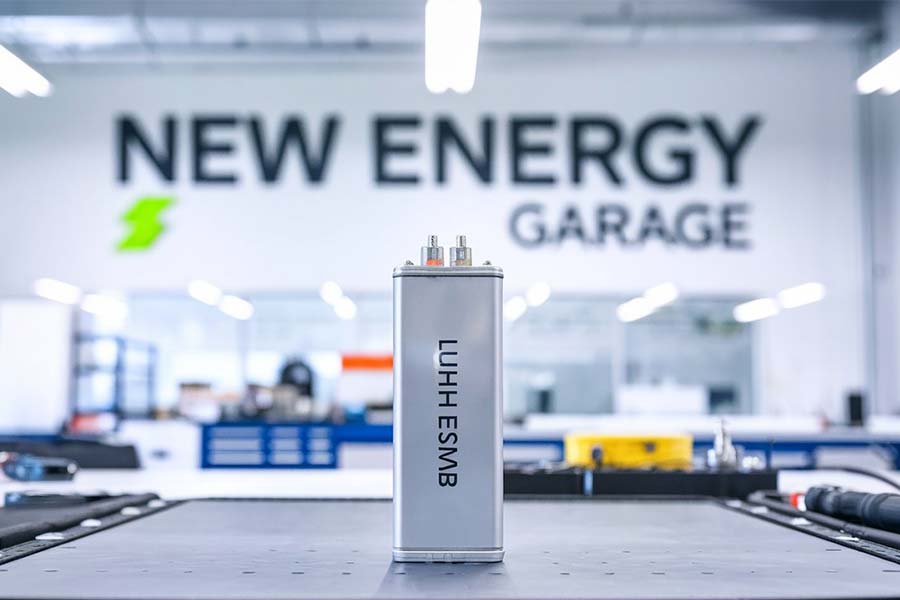
Saarlands opposition party CDU state chairman Toskani responded to the news by stating that the state is currently facing a severe industrial crisis.BeeChao Energys exit is just the tip of the iceberg,with other major companies like Bosch announcing layoffs,further exacerbating local economic pressures.Saarland Chamber of Commerce and Industry Managing Director Tome openly criticized the federal governments economic policies,claiming they make investing in the country extremely difficult.Tome argued that the lack of effective economic support measures has made foreign companies,including BeeChao Energy,hesitant to continue investing in Germany,impacting local economic development.
Although BeeChao Energys exit poses a significant challenge to Saarlands economy,the state government has not officially declared the failure of BeeChao Energys factory construction plan.The government stated it is evaluating various possibilities and seeking new investment opportunities to alleviate the current economic difficulties.However,BeeChao Energys withdrawal undoubtedly adds more uncertainty to Saarlands economic recovery.
Manager Magazins analysis noted that BeeChao Energys exit reflects the broader challenges facing Europes battery manufacturing industry.Recently,European battery manufacturers have frequently issued warning signals.For example,the battery company ACC,a joint venture between Mercedes-Benz and Stellantis,suspended construction plans for two factories in Germany and Italy in June.Additionally,Europes largest battery producer,Northvolt,announced 1,600 layoffs in September and paused construction of one factory.
These events indicate that Europes battery manufacturing industry is facing unprecedented challenges.Market demand uncertainty,supply chain bottlenecks,and high operational costs are the main reasons forcing companies to scale back or suspend expansion plans.Amid fierce global competition in the electric vehicle market,European battery manufacturers face strong competitive pressure from Asian companies,particularly those in China.
BeeChao Energys decision not only impacts Saarlands economy but also highlights the fragility of Europes overall battery manufacturing industry.As a critical link in the global electric vehicle supply chain,the stable development of battery manufacturing is vital for Europes energy transition and industrial recovery.However,the current market environment and insufficient policy support cannot effectively sustain long-term corporate investments and expansion needs.
Saarlands predicament has also sparked reflection on Germanys overall investment climate.Tome pointed out that the federal governments ineffective policies in attracting foreign investment have weakened Germanys competitiveness in global manufacturing.Particularly in high-tech andindustries,Germany urgently needs more favorable policies to attract international investment and drive local industrial upgrades and development.
Moreover,the challenges in Europes battery manufacturing industry underscore the realignment of global supply chains.Amid geopolitical shifts and global economic uncertainty,companies are becoming more cautious in their investment strategies.How to maintain competitiveness in a complex and volatile international environment has become a pressing issue for European battery manufacturers.
In response,German and European governments must take more proactive measures to optimize the investment environment,provide stronger policy support,and promote the recovery and development of the battery manufacturing industry.Meanwhile,companies must enhance innovation,improve technical capabilities,and reduce production costs to cope with increasingly fierce market competition.
In summary,BeeChao Energys exit from Europe is both a microcosm of Saarlands economic challenges and a reflection of the broader struggles facing Europes battery manufacturing industry.Maintaining a leading position in global competition and improving supply chain stability and competitiveness through policy and market adjustments will be key to Europes future economic development.
German Federal Statistical Office (Destatis) President Ruth Brand stated at a press conference that despite current challenges,the German economy is striving to overcome difficulties and maintain growth momentum.She emphasized,We are doing everything possible through various policy measures to support key industries and ensure sustained and healthy economic growth in Germany.
With the rapid development of the global electric vehicle market and the push for energy transition,the recovery of Europes battery manufacturing industry will not only impact economic growth but also determine Europes position and influence in the global new energy sector.All stakeholders must work together to find solutions and achieve sustainable development goals.
Was this helpful? Give us a like!
Contact our experts for compliance audits, precise quotes, and one-stop customs support.
Recent Comments (0) 0
Leave a Reply