
Germany Faces Trade Turmoil Amidst US Tariffs
or complex compliance issues.
clearance and fund security.
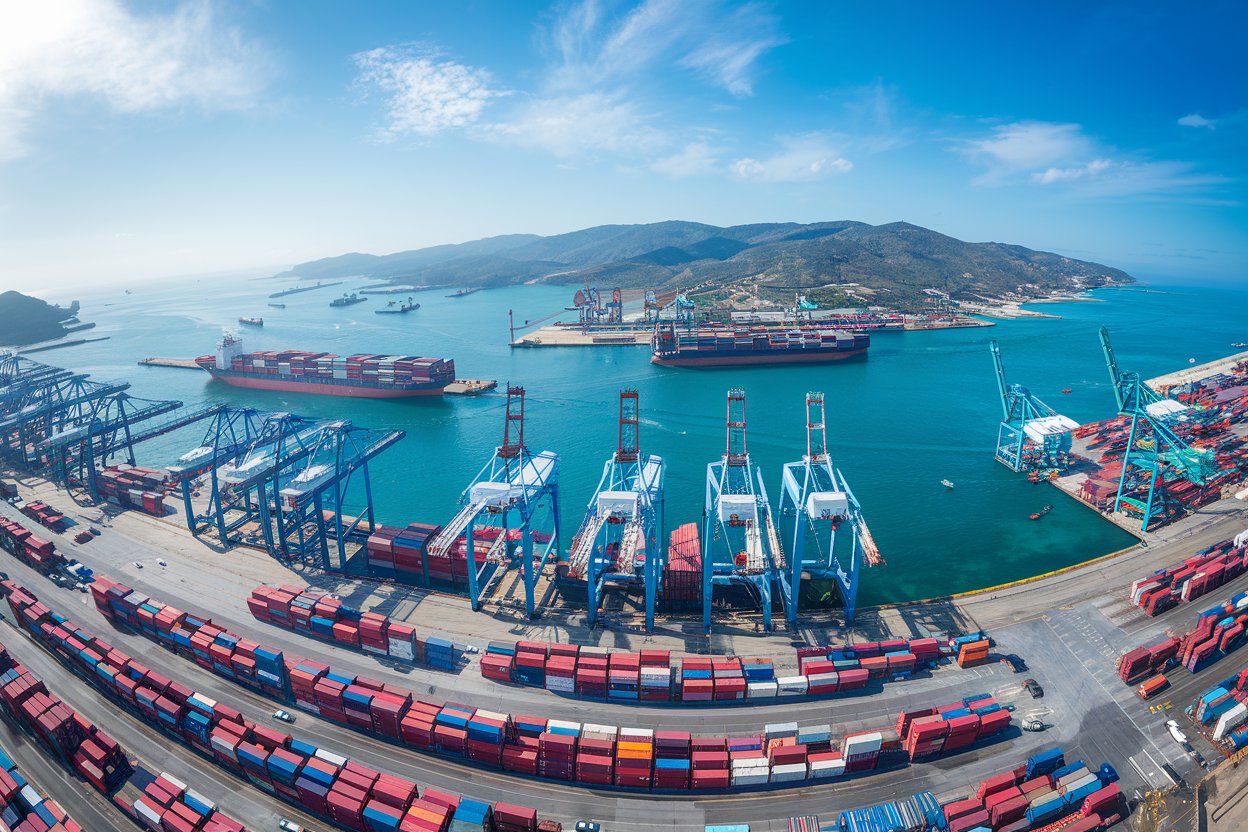
Recently,U.S.President-elect Donald Trump announced future tariff plans,causing high anxiety in German authorities.As the U.S.s largest trade partner in Europe,the German government has expressed strong concern.Michael Link,Germanys Transatlantic Cooperation Coordinator,harshly criticized Trumps plans to impose prohibitive tariffs on imports from Mexico,Canada,and China.
Link stated: Trumps announced import tariffs once again demonstrate his political style: he conflates so-called allies and competitors.In the current fragile geopolitical situation,destabilizing alliances,Trump will cause severe damage to the global economy.He further emphasized that Germany must prepare in advance to become a target of Trumps attacks and should not passively wait for his protectionist measures but instead decisively implement economic reforms,such as reducing business taxes.
Any U.S.tariffs on European exports would deal a heavy blow to German industry.Germany is currently experiencing an unprecedented economic crisis,with the decision to abandon cheap Russian gas causing electricity costs to soar,leaving many energy-intensive industries from metallurgy to automotive manufacturing in dire straits.Rising electricity costs have significantly increased production costs for these industries,weakening their competitiveness.
German Economy Minister Robert Habeck has publicly supported lowering electricity prices,calling it a key measure to address Germanys economic weakness.He said: The main pressure comes from traditional industries,namely energy-intensive industries and the automotive sector.In these areas,lowering electricity prices would not only help in the short term but also,in the foreseeable future,we should eliminate infrastructure costs from electricity prices as much as possible or at least halve them.
One of the hardest-hit companies is steel giant Thyssenkrupp.The company recently announced large-scale layoffs that could affect up to 11,000 workers.This move has sparked strong opposition from the labor union IG Metall.Knut Giesler,the unions regional director and deputy chairman of Thyssenkrupp Steels supervisory board,stated: We will not discuss this matter with Thyssenkrupp in any way; the companys actions are a major provocation.Layoffs and plant closures due to operational reasons are red lines we have repeatedly drawn,and Thyssenkrupp has crossed them.
Giesler further emphasized: "The solution to the predicament is not simply to shut down and lay off workers in a crude manner.Before layoffs and factory closures are once again ruled out and long-term financing is decided,the union will not sit down at the negotiating table with the board." His words indicate that a fierce tug-of-war is about to unfold between the union and the company,and the conflict between labor and management may further escalate.
In the field of international trade,Trump’s tariff policies may have a profound impact on the global economy.As an export-oriented economy,Germany is deeply affected by changes in the global trade environment.Any new tariff measures could trigger a chain reaction in its economy.Experts point out that Germany needs to swiftly adopt countermeasures,including strengthening cooperation with other trade partners,seeking new markets,and advancing domestic economic reforms.
At the same time,other European countries are closely monitoring the developments.The European Union may need to reassess its trade strategy to address new challenges from the United States.The rise of trade protectionism has put the global trade system to a severe test,requiring countries to seek win-win solutions through cooperation while safeguarding their own interests.
Was this helpful? Give us a like!
Contact our experts for compliance audits, precise quotes, and one-stop customs support.
Recent Comments (0) 0
Leave a Reply