
China's Toy Industry: Design-Driven Growth in Southeast Asia
or complex compliance issues.
clearance and fund security.
Japanese media recently reported that Thai consumers are enthusiastic about purchasing Chinese figurines,drawing attention to the popularity of Chinas toy industry in Southeast Asia.Thirty years ago,Chinese toy companies began shifting production capacity globally,but early efforts were more OEM-based with low added value.Today,as quality and design levels continue to improve,Chinas toy industry is gradually shaping a new international image.For the Southeast Asian market,China is no longer just a labor-intensive OEM factory but is moving toward the mid-to-high end of the global value chain with higher quality and more creative Toy Manufacturing 2.0 models.
Taking the Chinese trendy toy Labubu as an example,this pointy-eared plush toy,launched by Pop Mart,became a fashion trend among young Chinese consumers and quickly gained popularity in Thailand,Vietnam,and other Southeast Asian countries.Over the past few months,Labubu has been seen everywhere at Bangkok airports and Vietnamese e-commerce platforms.Celebrity endorsements and social media viral marketing have spurred a buying frenzy for this Chinese trendy toy in Southeast Asia.A photo of Thai Princess Sirivannavari wearing a Labubu accessory at an event became a catalyst for the toys sudden popularity.Southeast Asian consumers share similar cultural preferences and aesthetic trends with China,and economic development and rising social media penetration have provided fertile ground for the accelerated overseas expansion of Chinese trendy toys.
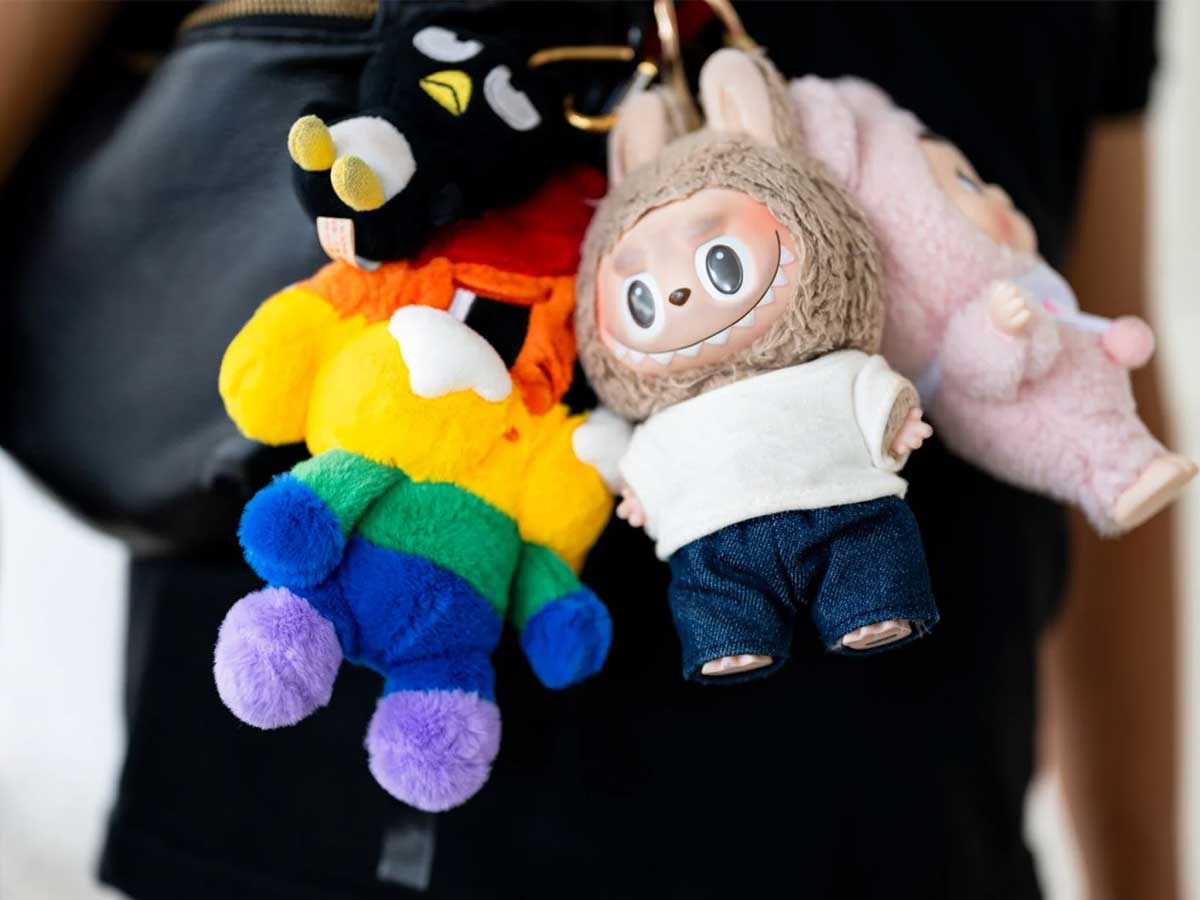
The breakthrough of China’s toy industry in overseas markets is not only attributed to social media and celebrity effects,but also stems from the profound upgrading of domestic industrial chains and independent innovation capabilities over the past few years.From traditional OEM factories to brand builders driven by independent design,Chinese toy manufacturers have continuously improved in terms of technology,quality,and creativity.As the world’s largest toy producer,China’s industrial clusters in regions like Chenghai,Dongguan,and Shenzhen provide enterprises with comprehensive upstream and downstream support and flexible supply chains,enabling them to obtain necessary components and services in a very short time.The maturity of industrial support helps reduce costs and accelerate product iteration,allowing brands to focus more on creative design and intellectual property.
According to industry analysts,Europe and the United States used to be the primary destinations for China’s toy exports.However,Southeast Asia has emerged as a rapidly growing market in recent years.Data from China’s customs shows that the U.S.remains the largest export market for Chinese toys in the first half of this year,while exports to ASEAN countries have also seen steady growth during the same period.The market potential of countries such as Singapore,Cambodia,and Thailand is gradually being unlocked.German data firm Statista predicts that the toy market in Southeast Asia will reach approximately $5.64 billion in 2023 and grow to $6.52 billion by 2028.Against this backdrop,an increasing number of Chinese toy companies are viewing Southeast Asia as a strategic stronghold,leveraging innovative designs,high-quality standards,and localized marketing to capture market share.
For Chinese enterprises,the Southeast Asian market not only represents an expansion of sales channels but also provides opportunities for the convergence of diverse cultures and styles.Some Chinese brands have localized their product designs,such as incorporating traditional Southeast Asian patterns or clothing elements into trendy toys,thereby winning the recognition of local consumers.Behind this innovative strategy lies the high importance Chinese toy companies place on intellectual property protection and brand building.Over the past 30 years,China’s toy industry once faced challenges from an OEM-dominated structure and counterfeit products.Today,however,it has established a foundation based on legal authorization,brand exports,and intellectual property protection,showcasing distinct brand awareness and cultural confidence.
From OEM at the end of the industrial chain to independent IP incubation,the role of Chinese toy companies is quietly transforming in the global market.The traditional "original equipment manufacturing" model can no longer meet the demand for personalization and quality from the new generation of consumers.Chinese enterprises are winning the favor of the international market with independent design,rapid market response,and creative cultural output.In the high-end toy markets of Europe and the Americas,over 80% of products are still made in China.Across Southeast Asia and globally,with the support of overseas warehouse layouts,e-commerce platform expansion,and social media marketing,Chinese toy brands are gradually shedding their low-end OEM image.
Looking ahead,Chinese toy companies must continue to exert efforts in the process of brand internationalization.Beyond maintaining competitiveness in quality and design,they need to actively participate in international exhibitions and marketing activities,collaborating with local distributors and artists to create cross-cultural products that blend local elements with a global perspective.Associations and institutions are also providing resources and platforms to help Chinese brands establish a more solid market foundation overseas.
The changes over the past 30 years signify that China’s toy export model has undergone a complete transformation.Collectible toys,IP licensing,cultural integration,and the expansion of digital channels—these elements collectively form the new era’s blueprint for the global expansion of China’s toy industry.The popularity of Chinese figurines and collectible toys in Southeast Asia serves as the best testament to the comprehensive upgrade and remarkable evolution of China’s toy sector.
Was this helpful? Give us a like!
Contact our experts for compliance audits, precise quotes, and one-stop customs support.
Recent Comments (0) 0
Leave a Reply