
China Tariff Adjustments 2025: What Manufacturers Need
or complex compliance issues.
clearance and fund security.
On December 28th,the Tariff Commission of the State Council of China issued the "2025 Tariff Adjustment Plan",which will be officially implemented from January 1,2025.This plan imposes provisional tariff rates lower than the most-favored-nation tariff rates on 935 imported goods,and at the same time involves tariff reductions or special treatment under 24 free trade agreements (FTAs) and preferential trade arrangements.This is another major initiative launched by China in the context of promoting high-level opening up and advancing high-quality development.The specific content of the policy includes reducing tariffs on some key sectors.
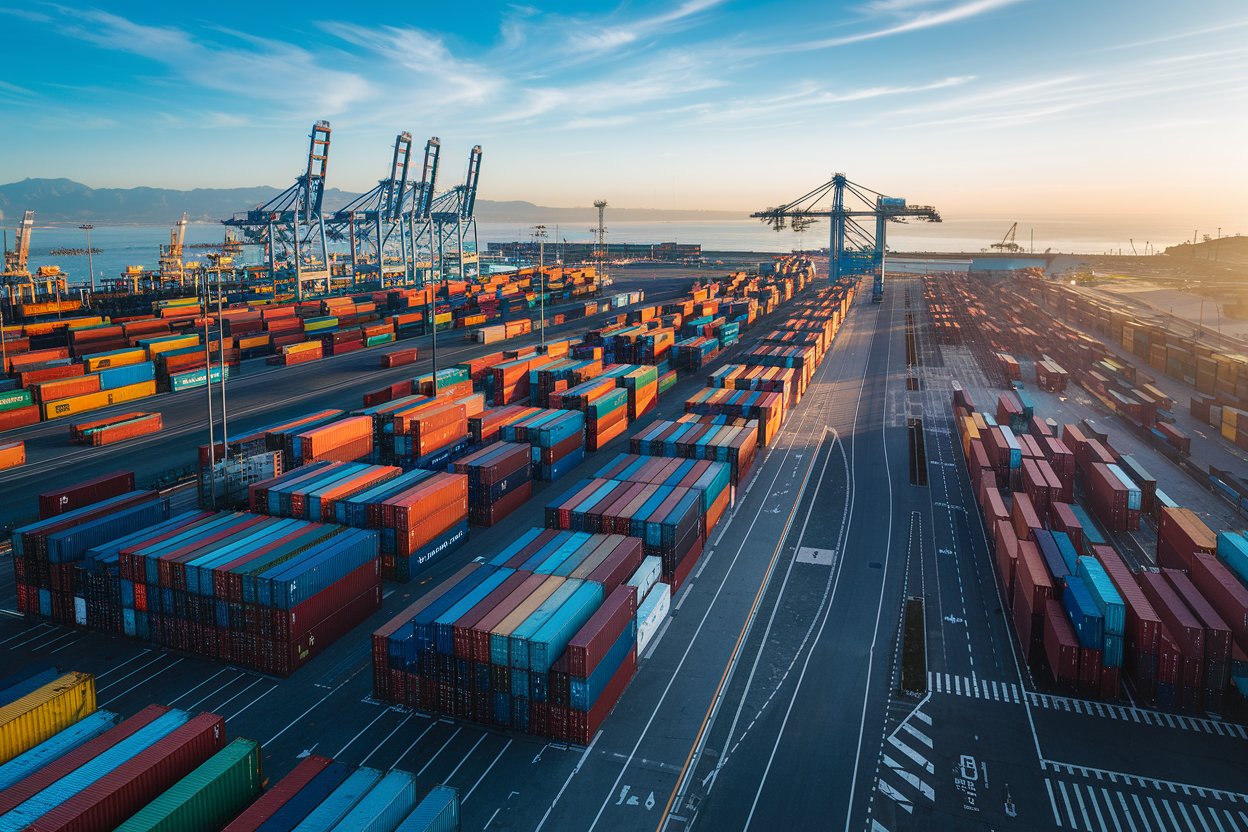
In this adjustment,the most notable feature is the implementation of provisional import tariff rates lower than the most-favored-nation (MFN) tariff rates for 935 items.These provisional tariff rates are generally significantly lower than the MFN tariff rates,aiming to attract high-quality product imports through tariff leverage,promote domestic technological upgrading,and meet consumers’ growing diverse needs.Taking infant and toddler formula milk powder as an example,the MFN tariff rate in 2025 is 15%,while the provisional import tariff rate is only 5%,significantly reducing enterprises’ import costs and bringing more competitive maternal and infant products to the market.
In the fields of high-end manufacturing and technological innovation,this round of tariff adjustments shows significant preferential treatment: for instance,import duties on cyclic olefin polymers,ethylene-vinyl alcohol copolymers,and automatic transmissions for special-purpose vehicles such as fire trucks and emergency repair vehicles have been reduced,injecting new momentum into downstream high-end manufacturing and emergency rescue equipment industries.Meanwhile,import tax rates in the pharmaceutical and healthcare sectors have also seen substantial reductions,including more favorable tariffs on viral vectors specifically used for CAR-T cancer therapies and nickel-titanium alloy wires for surgical implants.These measures aim to further enhance the technological capabilities of domestic medical services and biopharmaceuticals,providing patients with more accessible and advanced treatment options.
It is worth mentioning that,to encourage green and low-carbon development,energy or recycled resource products such as ethane and certain recycled copper and aluminum raw materials have also received preferential import tariff treatment,aimed at accelerating the construction of energy-saving and environmentally friendly industrial chains and promoting the achievement of the "dual carbon" goals.In contrast,the tariff rates for goods that domestic industries can already produce on a sufficient scale or those for which excessive import dependence is no longer urgent have been increased.For example,the tariffs on syrup and sugar-containing premixed powder,vinyl chloride,and battery separators have been slightly raised compared to before.These adjustments remain within the scope of China’s commitments upon joining the World Trade Organization and do not violate multilateral trade rules.
Another major highlight is the expansion of the coverage of free trade agreements and preferential trade arrangements.In 2025,China will implement agreement tariff rates on some imported goods originating from 34 countries or regions under 24 free trade agreements,and the relevant preferential measures will generally be higher than the most-favored-nation tariff rates.Among them,the China-Maldives Free Trade Agreement will officially take effect and start reducing tariffs from January 1,2025.After the final tariff reduction is completed,about 96% of the tariff items between the two sides will achieve zero tariffs,which is of great significance for further deepening bilateral economic and trade cooperation.
In addition to free trade agreements,China continues to grant zero-tariff treatment on 100% of tariff lines to 43 countries that have established diplomatic relations with China and are classified as least-developed countries,aiming to help these nations better integrate into the global value chain and share development opportunities.Meanwhile,under the Asia-Pacific Trade Agreement and intergovernmental exchange of notes with certain ASEAN countries,China will implement preferential tariff rates on imports from Bangladesh,Laos,Cambodia,Myanmar,and other regions.These arrangements highlight China’s active role in regional cooperation and South-South cooperation.
The tariff plan also includes further improvements to the tariff classification system and the explanatory notes for national subheadings.For instance,new subheadings have been added for pure electric passenger vehicles,canned king oyster mushrooms,spodumene,and ethane.The descriptions of certain items,such as coconut juice and prepared feed additives,have been optimized to be more scientific and standardized.Additional explanatory notes have been introduced for dried laver,recarburizers,and injection molding machines,while the notes for products like baijiu (Chinese liquor),wood-based activated carbon,and thermal print heads have been refined.These updates aim to help businesses and regulatory authorities classify and manage products more accurately,thereby enhancing customs operations and trade statistics.
Many industry analysts pointed out that the "2025 Tariff Adjustment Plan" continues to reflect China’s consistent philosophy of "opening up further and promoting domestic industrial upgrading".On the one hand,lower tariffs can inject more high-end international products into the market,accelerating the internal upgrading of technology and productivity.On the other hand,moderately raising tariffs on a small number of commodities can ensure domestic production supply while encouraging local enterprises to continue investing in technological improvement and industry deepening,forming an ecology of effective competition and cooperation.Overall,this adjustment is a prudent upgrade based on a comprehensive assessment of international trade rules and domestic economic realities,in line with China’s policy orientation of "high-quality development".
For enterprises,the new tariff catalog and more refined tariff item adjustments present both opportunities and challenges.Businesses must closely monitor changes in relevant tax rates,new tax categories,certificate requirements,and rules of origin to avoid crossing policy red lines or missing out on policy benefits in specific trade processes.Tariff preferences with least-developed countries and multilateral/bilateral agreement partners require companies to make forward-looking plans in market expansion,supply chain layout,and other areas to fully leverage the competitive advantages brought by zero tariffs or lower tax rates.Overall,this tariff adjustment plan will create more trade opportunities for China and its partners in 2025,supporting steady global economic recovery and inclusive growth.Proactive planning in these areas is necessary to fully leverage the competitive advantages brought by zero tariffs or lower tax rates.Overall,this tariff adjustment plan will create more trade opportunities for China and its trading partners in 2025,helping to promote steady recovery and inclusive growth of the global economy.
Was this helpful? Give us a like!
Contact our experts for compliance audits, precise quotes, and one-stop customs support.
Recent Comments (0) 0
Leave a Reply