
US Tariffs: Global Impact on Manufacturing Costs
or complex compliance issues.
clearance and fund security.
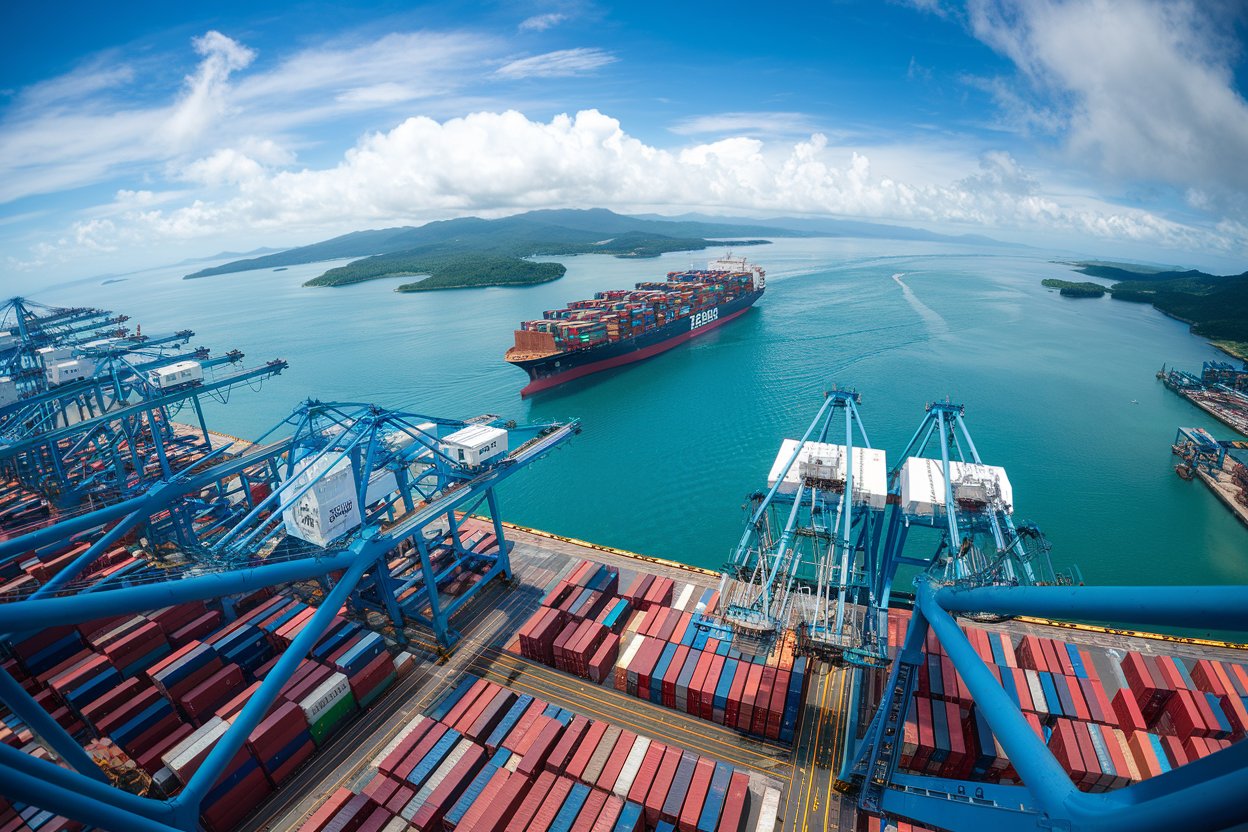
On Friday local time,U.S.President Donald Trump unexpectedly announced during a meeting with Japanese Prime Minister Shigeru Ishiba that he would unveil a "reciprocal tariff" policy targeting multiple countries next week,marking a new phase in trade tensions between the U.S.and its major trading partners.Upon the news,the three major U.S.stock indices immediately fell,with the Dow Jones Industrial Average dropping over 200 points within half an hour,reflecting market concerns over escalating trade conflicts.Trump emphasized that the new measures aim to ensure "completely reciprocal trade relations" between the U.S.and other nations,stating that the policy would apply to "everyone," but declined to disclose the specific list of affected countries.
It is noteworthy that Trump specifically mentioned automobile tariffs as a key option in the policy toolkit.He stated,"The automotive industry is a matter of national interest,and we must use tariffs to achieve trade balance." This remark continues his administration’s strategy of pressuring major automobile exporters such as Germany and Japan.Analysts point out that if the U.S.imposes a 25% tariff on imported vehicles,the global automotive supply chain could face cost impacts of up to $50 billion,potentially forcing some multinational automakers to adjust their global production layouts.
This policy upgrade builds upon the previous executive order.Earlier this month,the White House announced tariffs of 10% and 25% on energy products and industrial goods from Canada and Mexico,respectively,but delayed implementation due to strong opposition from the business community.This "threat-delay" pattern has raised questions about the coherence of the Trump administration’s trade strategy."This erratic decision-making makes it difficult for businesses to formulate long-term plans," said Mark Atkinson,Vice President of International Trade at the Canadian Chamber of Commerce.
The EU responded quickly.Bernard Lange,chairman of the Trade Committee of the European Parliament,revealed that Brussels is considering reducing US auto import tariffs as a compromise.This continues the EUs strategy in recent years to avoid a full - scale trade war - previously,by reducing lobster tariffs and increasing liquefied natural gas purchases,the EU successfully limited the US - EU trade disputes to the steel and aluminum product sectors.However,EU internal documents show that if the United States implements global tariffs,the Section 301 investigations of strategic industries including pharmaceuticals and oil may be restarted.
The Trump administration has identified the value-added tax (VAT) system as a new battleground in trade negotiations.White House trade adviser Peter Navarro has repeatedly accused the EU’s VAT regime of constituting "hidden trade barriers," arguing that the 15% minimum standard rate and its differentiated implementation undermine the competitiveness of American products.This perspective has drawn rebuttals from European economists.An IMF research report indicates that the average sales tax rate across U.S.states is approximately 6.5%,and when combined with federal taxation,the actual tax burden is comparable to Europe’s.However,political considerations appear to have outweighed economic analysis,with Trump bluntly stating in the Oval Office: "We won’t take more,but we’ll never settle for less."
The response strategies of multinational enterprises show a polarization.Some technology companies and retailers are accelerating the diversification of their supply chains.Companies such as Amazon and Walmart have recently increased the proportion of purchases from Southeast Asian suppliers.While heavy - industry enterprises such as Boeing and Caterpillar are increasing their lobbying efforts,worried that retaliatory tariffs will affect their overseas markets.A latest survey by the US Chamber of Commerce shows that 83% of manufacturing enterprises believe that the current trade policies have increased their operating costs,an increase of 12 percentage points compared with the same period last year.
Market observers noted that the policy announcement coincided with a shift in the Federal Reserve’s monetary policy stance.Seema Shah,Chief Strategist at Principal Global Investors,pointed out: "The dual pressures of trade war risks and interest rate policies may amplify volatility in capital markets." The CBOE Volatility Index (VIX) surged 18% on Friday,marking its largest single-day gain in three months.Energy markets were also affected,with WTI crude futures dropping 2.3%,reflecting investor concerns about global growth prospects.
Was this helpful? Give us a like!
Contact our experts for compliance audits, precise quotes, and one-stop customs support.
Recent Comments (0) 0
Leave a Reply