
US Tariffs: Global Trade Rules Face New Shock
or complex compliance issues.
clearance and fund security.
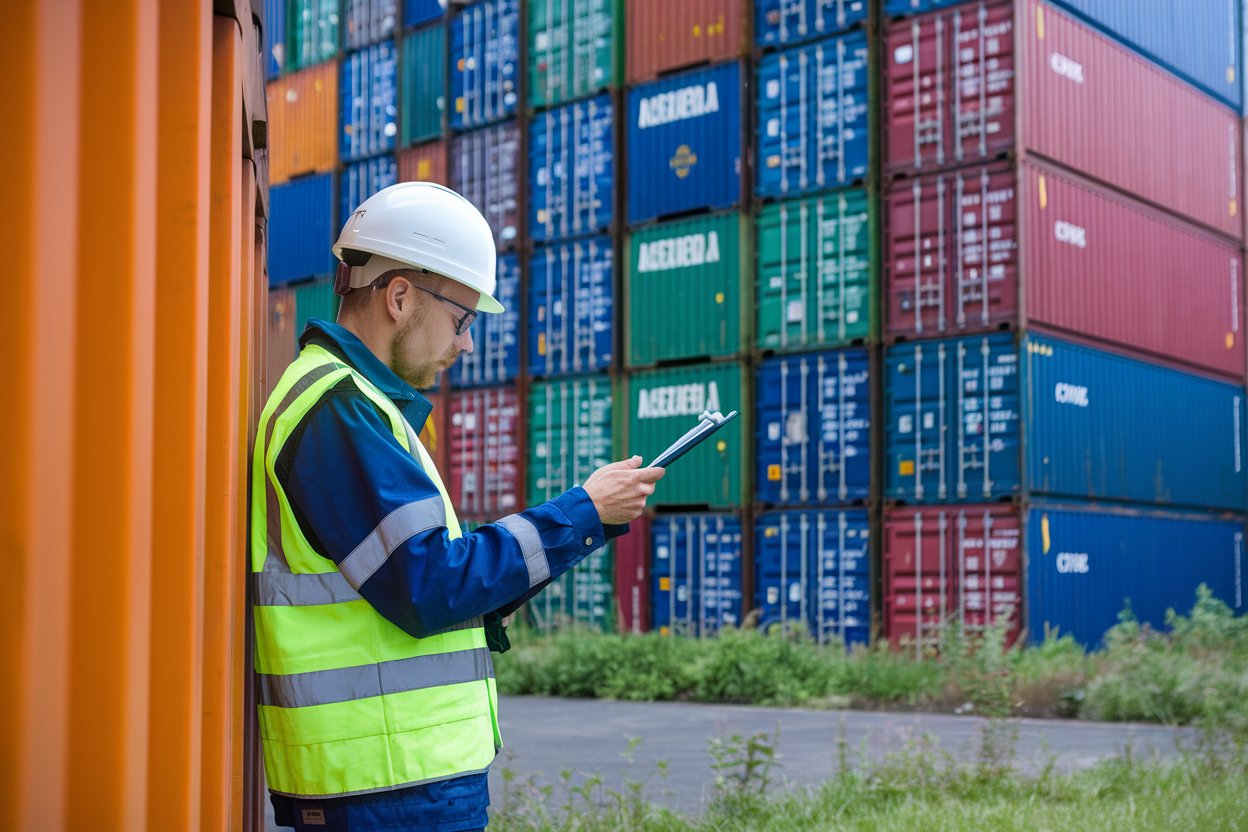
On Air Force One,which was flying to New Orleans to watch the Super Bowl,US President Trump dropped a bombshell to the accompanying reporters on February 9 local time: He would announce a 25% import tariff on steel and aluminum products from all countries the next day.If this policy is officially implemented,it will completely change the six - year - old tariff exemption system,marking that the global trade rules are facing a new round of systematic shocks.The news caused violent fluctuations in the international commodity market.The price of three - month aluminum on the London Metal Exchange fell by 1.8% immediately,while the share price of U.S.Steel soared by 5.3% in after - hours trading.
According to joint data from the U.S.government and the American Iron and Steel Institute (AISI),in the first 11 months of 2024,Canada,Brazil,and Mexico accounted for 42% of total U.S.steel imports,with Canada’s single-month maximum shipment reaching 830,000 tons.In the aluminum sector,Canada monopolizes 79% of the U.S.primary aluminum supply,while Mexico controls the core share of the scrap aluminum and aluminum alloy markets.This deep supply chain integration could trigger a chain reaction from the new tariff policy—Deutsche Bank analysts estimate that the cost of the North American automotive manufacturing industry may increase by 3-5 percentage points.Given the existing 25% tariff on pickup trucks in the U.S.market,the profit margins of car companies such as Stellantis and Ford may face double-pressure squeezes.
Trump specifically emphasized that this policy adjustment would eliminate the duty-free quota system established during his first term.The steel and aluminum tariffs implemented in 2018 had granted exemptions to countries like Canada and Mexico,while the Biden administration later extended these exemptions to strategic partners such as the EU and Japan.This gradual relaxation policy had reduced the capacity utilization rate of U.S.steel mills from a peak of 79.3% in 2019 to 73.1% in 2023,but the full implementation of the new tariffs could reverse this trend.The Alliance for American Manufacturing quickly issued a statement supporting the policy,calling it "a necessary measure to rebuild the competitiveness of foundational industries."
Even more alarming is Trump’s simultaneous announcement of plans to introduce a "reciprocal tariff" mechanism within 48 hours,declaring that it would "immediately match any tariff rates imposed by other countries upon the announcement’s effect." This instant retaliatory measure eliminates the time buffer traditionally afforded by trade dispute resolution mechanisms.Alan Wolff,former Deputy Director-General of the World Trade Organization (WTO),warned: "This is akin to lighting a torch next to a powder keg." According to the latest WTO statistics,the U.S.currently has a trade-weighted average tariff rate of 2.2%.If the comprehensive reciprocity principle is implemented,tariffs on Indian goods would surge to 12%,and Brazil’s to 6.7%,potentially triggering a wave of countermeasures from emerging market countries.
An internal risk assessment report leaked from the European Commission reveals that Brussels is urgently evaluating three response scenarios: filing a complaint with the WTO,initiating targeted countermeasures,or negotiating through expanded liquefied natural gas procurement.German Economy Minister Robert Habeck stated bluntly at an emergency meeting in Berlin: "We must prepare for European automakers to face a 25% export tariff." This concern stems from the structural disparity in auto tariffs between the U.S.and the EU—the EU’s uniform 10% auto import rate contrasts sharply with the U.S.’s 2.5% passenger car tariff,while America’s 25% protective tariff on pickup trucks highlights the policy’s complexity.
Asian supply chains are also facing pressure to restructure.The Vietnamese Ministry of Industry and Trade revealed that the country’s steel enterprises have activated emergency plans,planning to redirect 30% of their exports to the United States to the ASEAN Free Trade Area.The South Korean Ministry of Industry,Trade and Resources urgently convened companies such as POSCO and Hyundai Steel to discuss countermeasures,considering using the regional value content provisions in the US-Mexico-Canada Agreement to circumvent tariffs.This kind of industrial chain adjustment may accelerate the differentiation of global trade sectors.Morgan Stanley’s research report predicts that the new tariff system may reduce the global trade volume growth rate by 0.8 percentage points in 2024.
Market volatility indicators continue to rise,with open interest in CME’s S&P 500 Volatility Index (VIX) futures contracts hitting an 18-month high.Eric Robertson,Global Head of Macro Strategy at Standard Chartered,noted: "When trade policy risks converge with geopolitical uncertainties,the pricing mechanisms of capital markets will face unprecedented pressure." Such concerns are reflected in the bond market,where the yield on the 10-year U.S.Treasury note fell by 7 basis points in a single day,signaling investors’ pessimistic outlook on economic growth prospects.
Was this helpful? Give us a like!
Contact our experts for compliance audits, precise quotes, and one-stop customs support.
Recent Comments (0) 0
Leave a Reply