
Europe's Russian Gas Imports Rise Amid Policy Pressure
or complex compliance issues.
clearance and fund security.
Amid increasingly complex geopolitical tensions and internal energy policy pressures,Europe has gradually increased its imports of Russian gas.Although the EU emphasizes reducing reliance on Russian energy as part of sanctions against Moscow,reality shows that Russian gas,especially through the TurkStream pipeline and liquefied natural gas (LNG),has become an irresistible choice for many European countries.
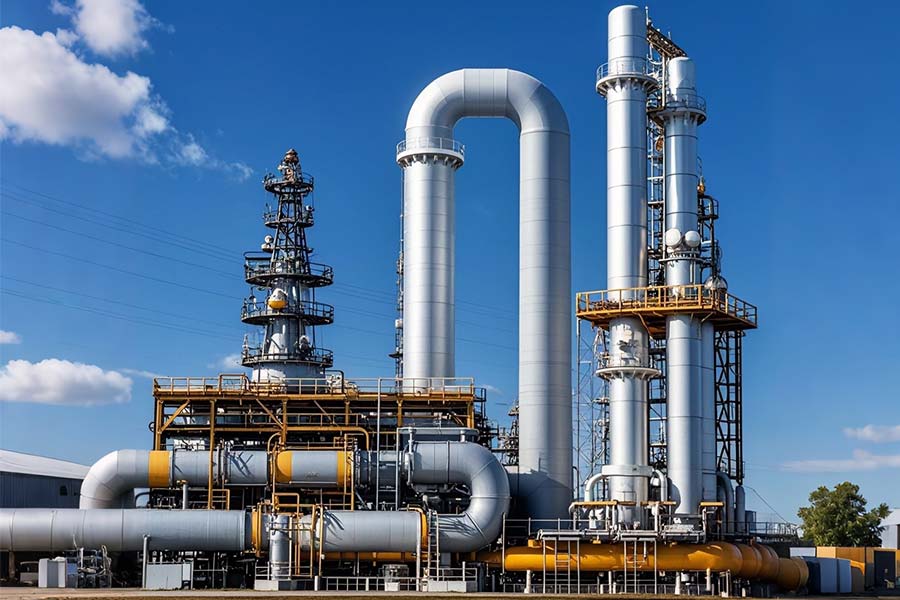
According to the data from the first seven months of 2024,the EU’s natural gas imports via the "Turkish Stream" pipeline increased significantly by 40.5% year-on-year,reaching 9.26 billion cubic meters of methane gas.In July alone,Russia’s supply via this pipeline increased by 29% month-on-month,reaching 1.5 billion cubic meters.This increase resulted in EU countries consuming a total of approximately 92 million cubic meters of Russian natural gas per day through the Ukrainian and Turkish pipelines.
However,this trend is not limited to pipeline gas.LNG imports have also shown significant growth in countries including France,Spain,and Belgium.Notably,France more than doubled its LNG imports from Russia in the first half of this year,rising from 2 billion cubic meters in 2023 to 4.4 billion cubic meters.Behind this trend lies a profound economic rationale: Russian gas,whether piped or liquefied,offers a clear price advantage.This has left Europe torn between policy-driven efforts to reduce dependence on Russia and the undeniable pressure of cost efficiency.
Looking back at historical data,it can be seen that Russia’s natural gas exports to Europe have experienced significant fluctuations since the outbreak of the Russia-Ukraine conflict.In 2022,Russia’s total natural gas exports to Europe reached 63.8 billion cubic meters,but in 2023,this figure plummeted by 55.6% to only 28.3 billion cubic meters.However,in 2024,especially during the period from January to July,Russia’s natural gas exports to Europe reached 18.2 billion cubic meters,an increase of 23% year-on-year.This increase shows that even in the face of severe international situations,Russian natural gas remains an indispensable part of Europe’s energy structure.
In addition,the gas transportation agreement between Russia and Ukraine is set to expire on December 31,2024,making the future supply of natural gas a focus of international attention.Although Moscow has expressed its willingness to continue gas deliveries,the Kiev government has made it clear that it does not plan to renew the agreement with the Kremlin.This uncertainty has further exacerbated Europe’s concerns about the security of energy supplies.
Meanwhile,the rise in LNG imports is particularly striking.Russian LNG is priced significantly lower than supplies from Arab,African,and American sources,making it economically attractive for countries like France.In the first half of this year,the EUs LNG imports from Russia increased by 7% year-on-year.This trend not only highlights the competitiveness of Russian LNG but also reflects Europes pragmatic choices under economic pressures.
Despite the EUs policy-driven efforts to reduce reliance on Russian energy,market forces and practical needs often push countries toward more flexible energy strategies.The price advantage of Russian gas ensures its strong competitiveness in the European market,adding new challenges to the EUs energy strategy adjustments.Moving forward,as the Ukraine transit agreement expires and global energy markets evolve,Europes choices in gas supply will become even more complex,with Russia continuing to play a pivotal role.
Was this helpful? Give us a like!
Contact our experts for compliance audits, precise quotes, and one-stop customs support.
Recent Comments (0) 0
Leave a Reply