
NEV & Power Battery Export: Global Certification & Standards
or complex compliance issues.
clearance and fund security.
Under the dual pressures of global energy crisis and environmental protection,vehicles have become the ideal transportation means of the new era.With the rapid growth of new energy vehicle sales,power batteries have also ushered in development opportunities.This article will explore in depth the certifications and standards required for exporting new energy vehicles and power batteries to destination countries,including import certification requirements for the US,EU,Nigeria,Tanzania,and Saudi Arabia,as well as relevant standards and export requirements for power batteries.
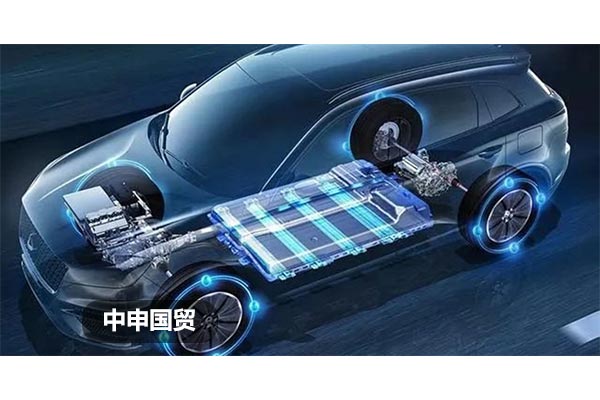
I.Export Certification Requirements for New Energy Vehicles:
US: New energy vehicles entering the US market must pass DOT safety certification and EPA environmental certification.These certifications are primarily self-tested by manufacturers,who determine compliance with production standards.
EU: Exporting new energy vehicles to the EU market requires e-mark certification,based on EU directives,involving component reviews and vehicle system inspections.
Nigeria: Exporting new energy vehicles to Nigeria requires SONCAP certification,a mandatory document for regulated products to clear customs in Nigeria.
Tanzania: Exporting new energy vehicles to Tanzania requires PVOC certification.All regulated products under the PVOC program must undergo inspection and comply with Tanzanian national standards or recognized standards.
Saudi Arabia: Exporting new energy vehicles to Saudi Arabia requires SABER certification,an online certification system under Saudi Arabias Product Safety Program.
Standards for Power Batteries in New Energy Vehicles:
Chinese Standards: Power batteries for vehicles must comply with GB38031,GB/T31484,and GB/T31486 standards.
EU Regulations: Power batteries for vehicles require E-Mark certification,including ECER100 and ECER10.Materials must meet RoHS requirements.
North American Regulations: Power batteries for vehicles must meet UL2580 standard requirements.
Indian Regulations: Power batteries for vehicles must meet AIS038 standard requirements.
Export Requirements for New Energy Vehicle Power Batteries:
Power batteries are classified into UN3480 (lithium batteries transported separately) and UN3171 (battery-powered vehicles or equipment),falling under Class 9 dangerous goods.Transport requires UN38.3 testing.Specific transport requirements vary by case,including pure electric vehicles,hybrid vehicles,and lithium-ion battery transport requirements.
(1) If the transported goods are pure electric vehicles,the special transport name is "Battery-powered vehicle," with the United Nations number "UN3171." For sea and land transport,it is classified as "Not restricted," and there are no packaging requirements;
(2) If the transported goods are hybrid vehicles,the proper shipping name is "VEHICLE,FLAMMABLE LIQUID POWERED," the UN number is "UN3166," and they are classified as "Not Restricted" for sea and land transport,with no packaging requirements.
(3) If the transported goods are lithium-ion batteries,the proper shipping name is "Lithium-ion batteries," the hazard class is "Class 9 dangerous goods," the UN number is "UN3480," and the corresponding packing group is "II" as specified by its packaging instructions.According to the "People’s Republic of China.Export Certification and Standards for New Energy Vehicles and Power Batteries
Was this helpful? Give us a like!
Contact our experts for compliance audits, precise quotes, and one-stop customs support.
Recent Comments (0) 0
Leave a Reply