
Mastering Japan's Agro-Vet Residue Management for Exports
or complex compliance issues.
clearance and fund security.
Excessive agricultural and veterinary drug residues are a common reason for non-compliance notifications of food exports to Japan.Understanding and adhering to Japans agricultural and veterinary drug residue management requirements are crucial for improving self-inspection levels of food exports and avoiding trade losses.This article aims to provide a comprehensive analysis of Japans agricultural and veterinary drug residue management system to help enterprises enhance compliance judgment logic and ensure smooth exports.
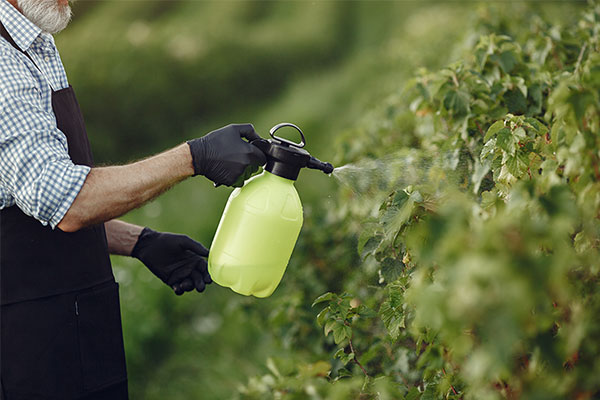
Japans Agricultural and Veterinary Drug Residue Management System
Japan has implemented the Positive List (PL) system for agricultural and veterinary drugs under the Food Sanitation Act since 2006.This system clearly defines maximum residue limits (MRLs) for agricultural and veterinary drugs in food raw materials and certain processed foods,ensuring that foods do not contain antibiotics or chemically synthesized antimicrobial agents.Its core contents are as follows:
(1) Residue Limits: The maximum residue limits for specific agricultural and veterinary drugs in specific foods.For example,the MRL for azoxystrobin in rice is 0.2 ppm.
(2) Non-Detectable: Certain substances,such as 2,4,5-T and 23 others,must not be detected in foods.
(3) Exempted Substances: 78 substances deemed harmless to humans,such as calcium phytate.
(4) Uniform Standard: For agricultural and veterinary drugs without specific residue limits,a uniform limit of 0.01 ppm is set.
Agricultural and Veterinary Drug Residue Requirements for Processed Foods
Japan has established specific MRLs for 60 types of processed foods and mineral water.For processed foods and other general foods not covered by these limits,the uniform standard of 0.01 ppm applies,unless they fall under non-detectable or exempted substances.For foods without specific MRLs,if the residue of an agricultural or veterinary drug exceeds the uniform standard,whether it constitutes a violation depends on case-by-case judgment.
Compliance Determination Logic for Agricultural and Veterinary Drug Residues Exceeding Uniform Limits
Compliance Determination Logic for Agricultural and Veterinary Drug Residues in Processed Foods
The Japanese Ministry of Health,Labour and Welfare states that for processed foods,the judgment should be based on the residue levels in raw materials.Specific logic includes:
Fresh Weight Conversion Factor:
Calculated based on food production processes to determine whether the residue in the final product complies with regulations.
Secondary Testing:
For potentially non-compliant foods,quarantine authorities may require more precise secondary testing.
Compliance Determination Logic for Agricultural and Veterinary Drug Residues Identical to Natural Substances
When an agricultural or veterinary drug is identical in composition to substances naturally present in plants or animals,and its residue in the product exceeds 0.01 ppm without a specified MRL,compliance should be judged based on natural background levels and relevant literature.
Summary
In Japan,the diversity of ingredients and processes in processed foods complicates compliance determination for agricultural and veterinary drug residues.Therefore,even if the detected residue in the final product exceeds the uniform standard (0.01 ppm),it does not necessarily mean a violation.Enterprises must judge based on the following logic:
Agricultural and Veterinary Drugs Identical to Natural Substances:
Analyze with reference to natural background levels and relevant literature,considering product characteristics.
Agricultural and Veterinary Drugs Introduced via Food Ingredients:
Calculate reasonable processing factors based on production processes and judge based on residue levels in raw materials.
In summary,Chinese enterprises exporting food to Japan must strictly comply with Japans agricultural and veterinary drug residue management system to avoid compliance risks and ensure smooth exports.
Was this helpful? Give us a like!
Contact our experts for compliance audits, precise quotes, and one-stop customs support.
Recent Comments (0) 0
Leave a Reply