
US Customs Policy Shift Disrupts E-commerce Logistics
or complex compliance issues.
clearance and fund security.
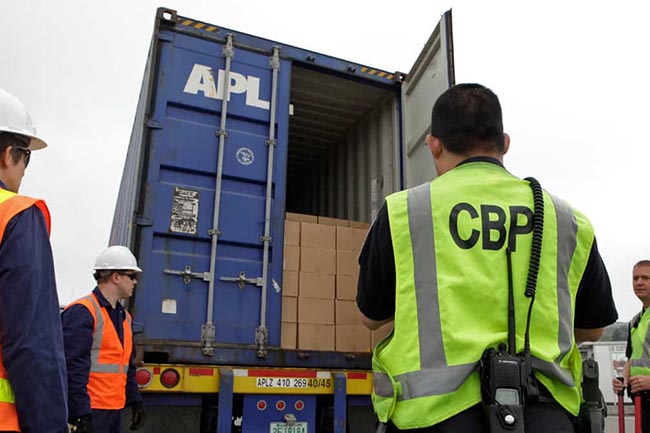
Inside the warehouses of the US Customs and Border Protection (CBP),millions of small - value parcels from China are piled up like mountains,a scene that vividly depicts the sharp turn of the Trump administrations tariff policy.From signing an executive order on February 1 to cancel the tariff exemption for cross - border parcels worth less than $800,to urgently suspending the new regulation on February 7,the policy reversal within just seven days not only led to logistics paralysis but also exposed the deep - seated contradictions in the US trade regulatory system.According to CBP internal documents,as of February 6,the total number of backlogged parcels at major US ports exceeded 1.5 million.The X - ray inspection equipment at the Los Angeles Customs malfunctioned due to over - operation,forcing the activation of manual sorting channels.
The core of this storm directly targets the "de minimis" tariff exemption system—a decades-old policy that allows small-value goods to bypass formal customs declarations,underpinning platforms like Temu,Shein,and AliExpress.The inadequacy of regulatory capabilities was fully exposed in this crisis.A CBP official anonymously revealed that the existing system can only handle the declaration needs of 3 million parcels per day,while the daily declaration volume suddenly increased to 5 million after the implementation of the new regulation.Whats more difficult is that about 35% of cross - border parcels lack compliant electronic data and require manual data entry,which is a disaster for the customs team that is already 15% understaffed due to heavy border control tasks.James Huang,legal counsel of the International Freight Association,warned: This is not a simple policy adjustment but an extreme stress test of the entire trade infrastructure.The response strategies of Chinese sellers have quickly diverged.Some merchants have started to shift to the overseas warehouse model,stockpiling goods in advance in warehouses within the United States to avoid customs clearance risks.A senior executive of a cross - border e - commerce platform revealed that the rental consultation volume of its Los Angeles overseas warehouse skyrocketed by 300% during the policy fluctuations.Although the warehousing cost increased by 20%,it is still a better choice compared to the tariff uncertainty.This shift coincides exactly with the latest policy of the General Administration of Customs of China - the new cross - border e - commerce regulation announced on February 6 clearly states that goods in overseas warehouses can apply for tax rebates upon departure,injecting a shot in the arm for the model transformation.A leading overseas warehouse service enterprise estimates that if fully converted to the pre - placed warehouse model,the average logistics time of Chinese sellers may be shortened by 3 - 5 days.
The inadequacy of regulatory capacity was laid bare during this crisis.Anonymous CBP officials revealed that the current system can only handle the declaration needs of 3 million packages per day,while the daily declaration volume surged to 5 million after the new regulations took effect.More critically,approximately 35% of cross-border packages lack compliant electronic data,requiring manual information supplementation—a disaster for the already understaffed customs workforce,which is 15% short due to heavy border control tasks.James Wong,legal counsel for the International Freight Association,warned,"This is not a simple policy adjustment but an extreme stress test for the entire trade infrastructure."
The response strategies of Chinese sellers have rapidly diverged.Some merchants have begun shifting to the overseas warehouse model,pre-stocking goods in U.S.warehouses to avoid customs clearance risks.An executive from a cross-border e-commerce platform revealed that inquiries for leasing their Los Angeles overseas warehouse surged by 300% during the policy fluctuations,"Although storage costs increased by 20%,it remains a better choice compared to the uncertainty of tariffs." This shift aligns precisely with the latest policy from China’s General Administration of Customs—cross-border e-commerce announced on February 6th.The new regulations clearly state that goods in overseas warehouses can apply for tax rebates upon leaving the country,injecting a shot in the arm for the model transformation.A leading overseas warehouse service enterprise estimated that if fully converted to the forward - warehouse model,the average logistics timeliness of Chinese sellers could be shortened by 3 - 5 days.
The policy swings of the Trump administration have triggered multi-party gamesmanship.The suspension of exemptions has been interpreted as a stopgap measure to buy time for CBP system upgrades,but the simultaneous announcement of a blanket 10% tariff on Chinese goods still hangs like the Sword of Damocles.J.P.Morgan’s supply chain finance team estimates that if the exemption policy is ultimately revoked,the customs clearance cost for individual small parcels will increase by $5-8,forcing products with unit prices below $15 out of the U.S.market.This shock has already been reflected in capital markets—Pinduoduo’s U.S.stock price fluctuated by 12% during the policy volatility,while Shein’s valuation model incorporated a 15% "regulatory risk discount."
Global logistics giants are redrawing their route maps.FedEx has quietly expanded cross-border land transport services between China and Mexico,attempting to leverage tariff benefits under the USMCA to indirectly access the U.S.market; meanwhile,Maersk is accelerating the deployment of direct shipping routes from Vietnam to the U.S.East Coast to accommodate potential production capacity shifts.While this "decentralization" strategy helps mitigate risks,it has driven up overall logistics costs.The Baltic Air Freight Index reveals that freight rates on China-U.S.routes surged by 18% during the policy volatility period,marking the largest increase since last year’s "Black Friday" season.
Was this helpful? Give us a like!
Contact our experts for compliance audits, precise quotes, and one-stop customs support.
Recent Comments (0) 0
Leave a Reply